Whispering Angel 2024 – Provence in a Glass
Pale rosé with fresh fruit, a soft texture and a clear sense of origin
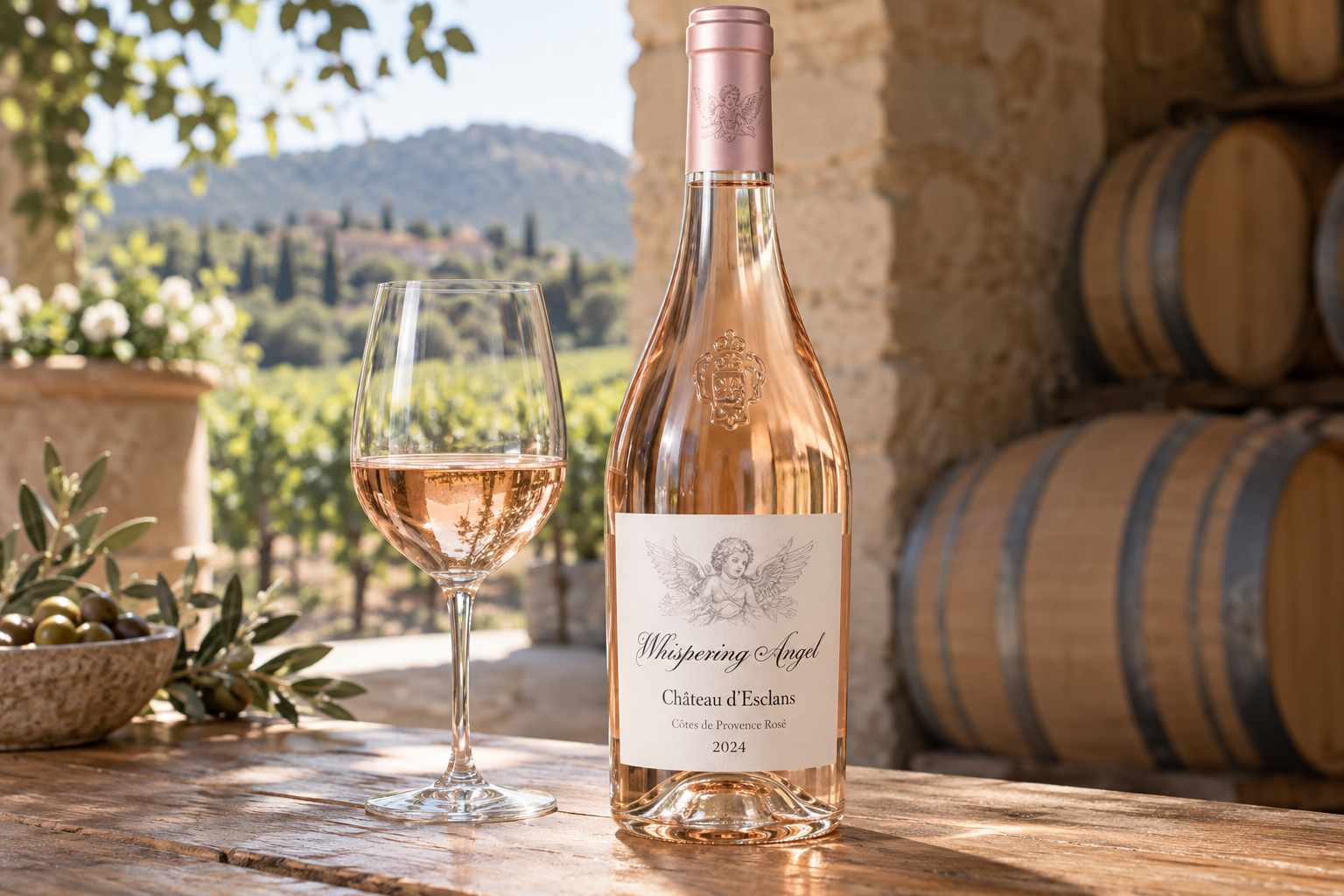
Whispering Angel 2024 from Château d’Esclans shows why dry Provence rosé has become a wine category to take seriously in its own right. Its expression is about delicate fruit, freshness and supple texture rather than power—a wine to open for its youthful charm.
Drinking window: 2025–2027 · Peak: 2025–2026, uppskattat utifrån stilen
- Producer
- Château d’Esclans
- Wine
- Whispering Angel
- Vintage
- 2024
- Type
- Torrt rosévin
- Origin
- Côtes de Provence, Frankrike
- Grapes
- Grenache, Cinsault, Rolle (vermentino)
- Serve at
- 10–12 °C
- Air
- Decanting is not normally necessary; let the wine open up in the glass for a few minutes.
Translated from Swedish with AI assistance. Prices converted at 10 SEK = 1 USD.
An origin beyond the château
Whispering Angel 2024 from Château d’Esclans is a dry rosé carrying the Côtes de Provence appellation. Its pale colour signals a familiar style, but tells us nothing in itself about how dry the wine is or how high its quality. The interest lies in the balance: fruit that feels ripe without becoming heavy, acidity that brings energy, and a texture that makes the wine versatile at the table.
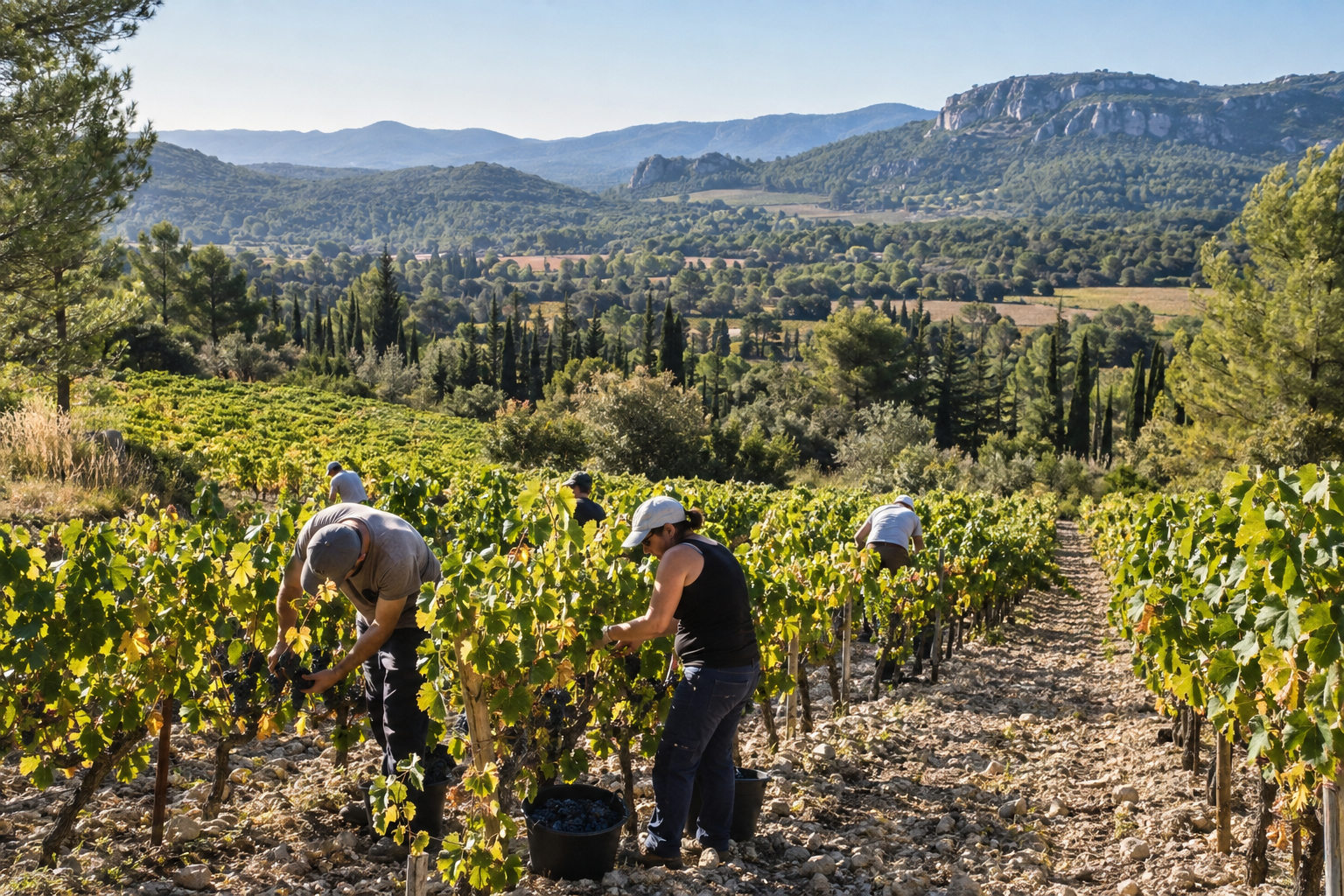
Château d’Esclans lies in the department of Var, near La Motte, some way inland from the Mediterranean. The landscape around the estate is hilly, with chalky soils and clay. But Whispering Angel should not be understood as a wine from a single château vineyard. The producer also works with grapes from contracted growers, and the wine’s origins extend beyond the estate itself. It would therefore be misleading to attribute the entire cuvée to one particular soil type or slope.
Côtes de Provence encompasses both limestone-rich areas and more crystalline bedrock. The Mediterranean climate brings sunny, generally dry summers, while winds can help dry things out after rain. Distance from the sea, altitude and exposure create local variations. For a large-scale blend such as this, selecting parcels of grapes is a way to unite ripeness with freshness, rather than express one small site.
A modern chapter in Provence
The modern story begins in 2006, when Sacha Lichine bought Château d’Esclans. His ambition was to give rosé a more assured place among serious, high-quality wines. Winemaker Patrick Léon, whose extensive experience included Bordeaux, played an important role in its development. In 2019, LVMH became the majority owner, while Lichine remained associated with the business.
Whispering Angel is the more widely available expression in a portfolio that also includes more ambitious, oak-influenced rosés. The distinction matters: the aim here is not pronounced oak flavour or maximum concentration. The philosophy is better summed up as careful grape selection, gentle handling and a pure, immediately approachable style. This is precision on a large scale, not a story of small-scale production.
Grenache, cinsault and the white grape rolle, also known as vermentino, are listed for the wine. No confirmed percentages for the 2024 vintage are given here. Grenache typically contributes fruit and body, cinsault brings lightness and delicate berry notes, while rolle can add citrus character and freshness.
The producer’s description of Whispering Angel emphasises temperature-controlled vinification in stainless steel. Gentle pressing limits the extraction of colour and astringency from the skins. Working with the lees—the yeast remaining after fermentation—helps build texture. Oak barrels, then, are not intended to provide the wine’s softness. Exact fermentation temperatures and ageing times for the vintage are not specified.
The 2024 vintage and its expression in the glass
The 2024 growing season in Provence was not entirely straightforward. Spring rain increased fungal disease pressure in some areas, while summer heat and drier spells brought different conditions in the run-up to harvest. Variations within the region were considerable. A regional weather overview alone therefore cannot explain the quality of a blend drawn from several growing sites.
I would be cautious about calling 2024 a great or weak Provence vintage without more specific evidence. For Whispering Angel, the producer’s ability to select and combine batches is especially relevant. A reasonable expectation is a wine built for freshness and early drinking, rather than to display a dramatic vintage character.
The account of aromas and flavours should also be read with the appropriate caveat: the description here is a stylistic assessment based on the producer’s information and the wine’s established profile, not a documented personal tasting of the 2024. Expect subtle notes of strawberry and raspberry, citrus and pale stone fruit, rather than dark berries or tropical richness.
On the palate, the ideal is dry and supple, with fresh acidity and a gently rounded mid-palate. Tannins, the compounds that create astringency, should be discreet. A slight skin-derived bitterness, however, can lend definition to the finish. Length should be judged by how the fruit and freshness linger, not by power. What sets the style apart is the interplay between restrained aromatics and more texture than the colour initially suggests.
Serve cool, but not ice-cold
Start at around 10–12 °C and use a standard white wine glass, preferably with a gently rounded bowl. Too low a temperature mutes the aromas and can make both acidity and bitterness feel sharper. A few minutes in the glass often do more good than a carafe; proper decanting is not normally necessary.
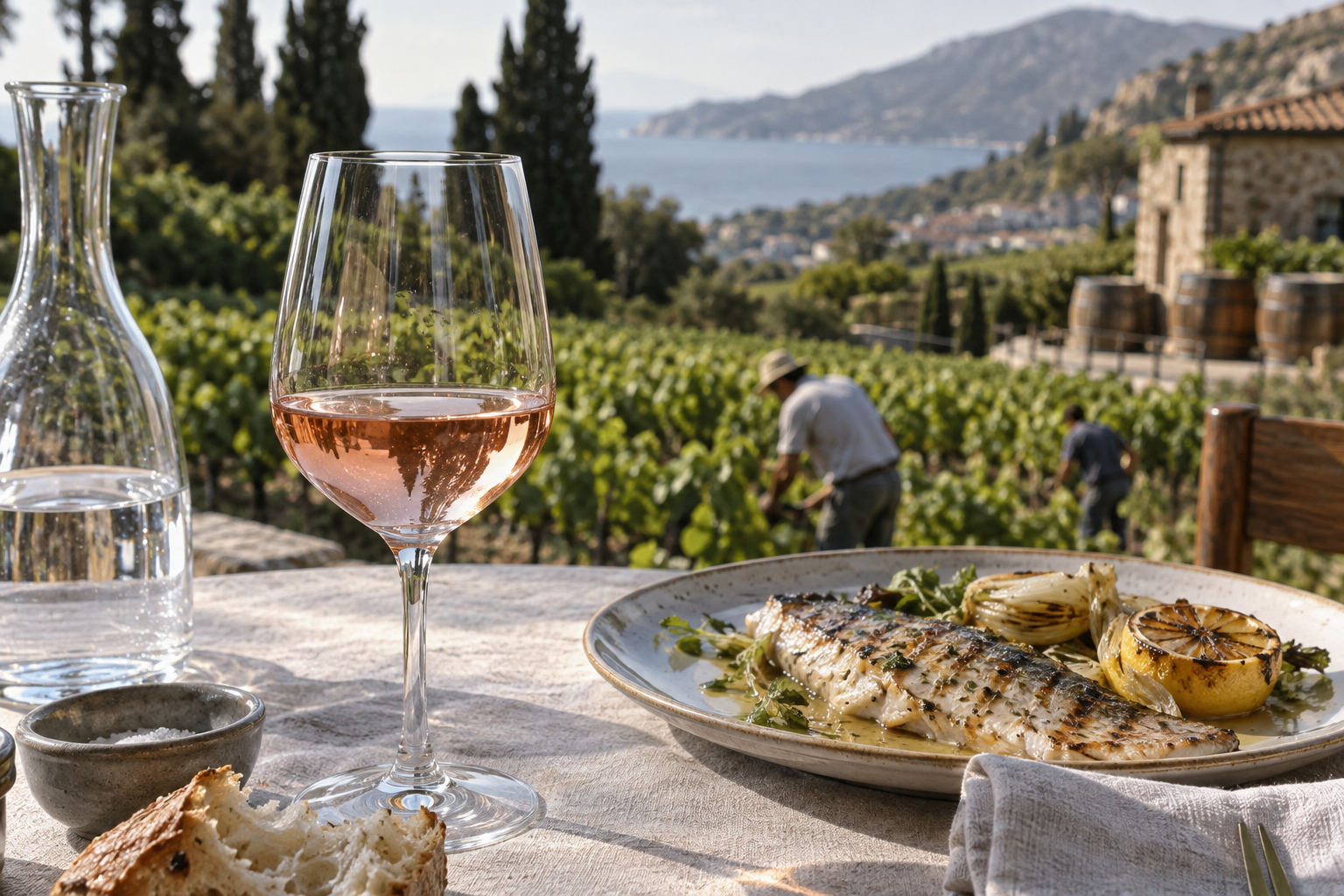
The 2024 vintage is a wine to drink now, not an obvious candidate for the cellar. My cautious drinking window is 2025–2027, with the emphasis on the earlier years, provided the bottle has been stored somewhere cool and dark. This is a style-based estimate, not a quoted critic’s drinking window. Over time, the berry character may fade and the colour deepen without the wine necessarily becoming more interesting.
At the table, try grilled fish with fennel and lemon, where the freshness complements both richness and citrus. A mild bouillabaisse also works, especially if the rouille is not too hot. For an alcohol-free option, a dry alcohol-free rosé with pronounced acidity can accompany the same dishes. Serve water alongside, and let the food, conversation and wine share the attention.
Tasting notes
- Dry and fresh
- Delicate berry fruit
- Citrus and stone fruit
- Soft texture
- Subtle astringency
Score 90/100. A provisional editorial estimate based on the producer’s established reputation for quality and the wine’s style. The score is not based on a documented personal tasting or a verified critic’s score for the 2024; it should not be read as a definitive tasting result.
10–12 °C · Decanting is not normally necessary; let the wine open up in the glass for a few minutes. · White wine glass with a gently rounded bowl. Approximate typical market price for 750 ml: around $25. Not a verified current Systembolaget price for the 2024 vintage.
- Grilled fish with fennel and lemonFresh acidity balances the richness of the fish, while the subtle fruit works with fennel and lemon.
- Mild bouillabaisse ↗The dry, supple style suits fish, tomato and herbs; go easy on spicy rouille. Recipe at Mat & Dryck.
Sources
- Château d’Esclans, Château d’Esclans – Whispering Angel och egendomens historia
- Conseil Interprofessionnel des Vins de Provence, Vins de Provence – appellationer, druvor och ursprung
- LVMH, LVMH – information om koncernens vin- och sprithus
- Institut national de l’origine et de la qualité, Côtes de Provence – appellationsregler och ursprungsskydd
Ask questions about "Whispering Angel 2024 – Provence in a Glass". Answers are based on the magazine's own articles.