Taylor’s LBV 2019 – dark fruit for a winter evening
Single-vintage port with softer edges and less waiting
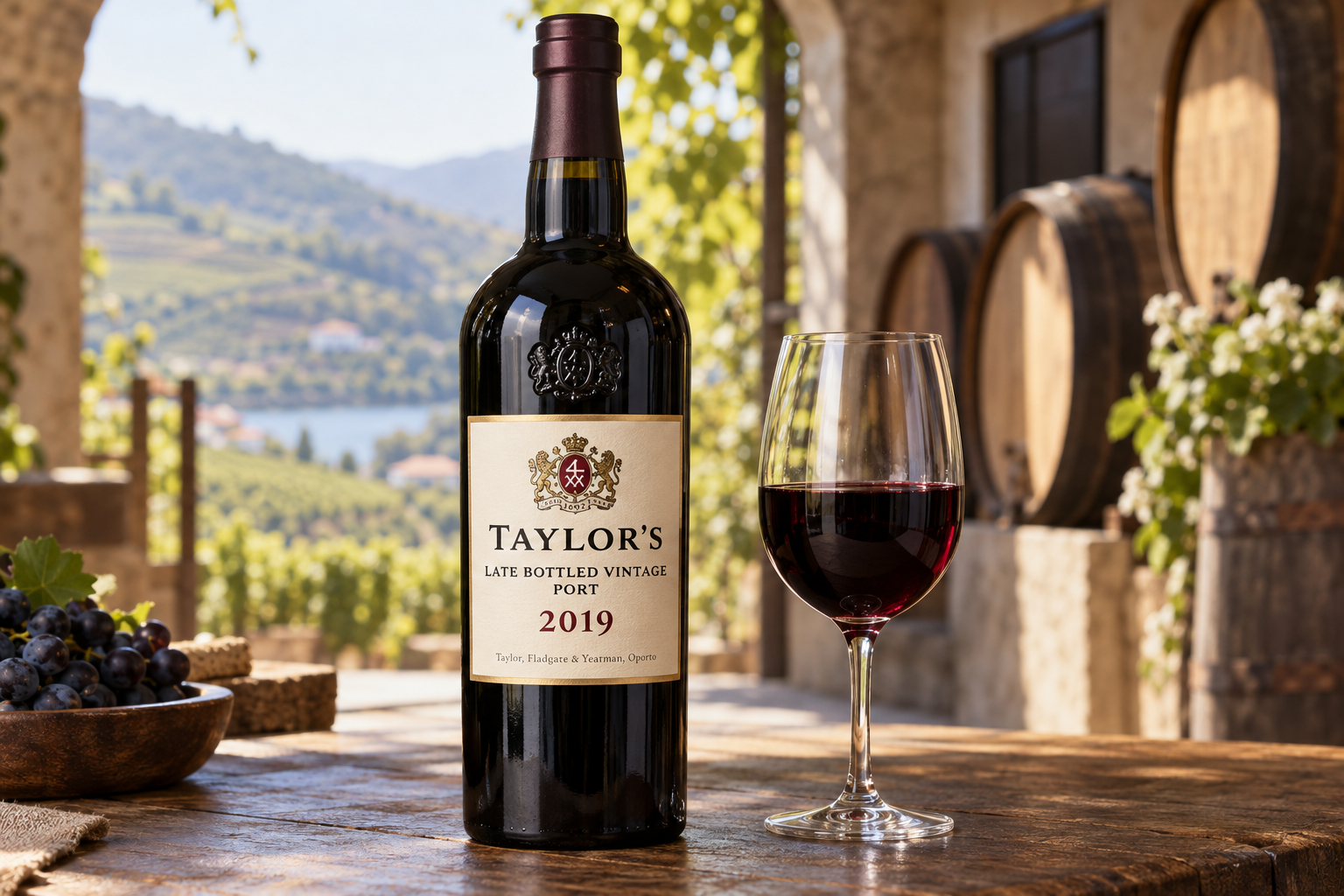
Taylor’s Late Bottled Vintage Port 2019 combines the Douro’s dark fruit with the rounded character that comes from several years in oak. This is a port for a small glass on a winter evening: concentrated and sweet, yet with enough structure to stand up to both blue cheese and dark chocolate.
Drinking window: 2024–2030 · Peak: Dricks med fördel nu; ungefär 2024–2028. Redaktionell stilbedömning, inte ett verifierat kritikerfönster.
- Producer
- Taylor’s
- Wine
- Late Bottled Vintage Port
- Vintage
- 2019
- Type
- Starkvin, rött sött portvin
- Origin
- Douro, Portugal
- Grapes
- Traditionella blå Dourodruvor; exakt druvfördelning för 2019 ej verifierad
- Serve at
- 15–17 °C
- Air
- Normally requires no decanting. Try opening 30 minutes before serving.
Translated from Swedish with AI assistance. Prices converted at 10 SEK = 1 USD.
The Douro’s steep slopes
Some ports demand decades in the cellar; others have already undergone their initial maturation at the producer’s estate. Taylor’s Late Bottled Vintage Port 2019 belongs to the latter group. LBV stands for Late Bottled Vintage: the grapes come from a single harvest, but the wine spends longer in oak than a Vintage Port. The result is a more approachable expression, without sacrificing dark fruit or port’s characteristic power.
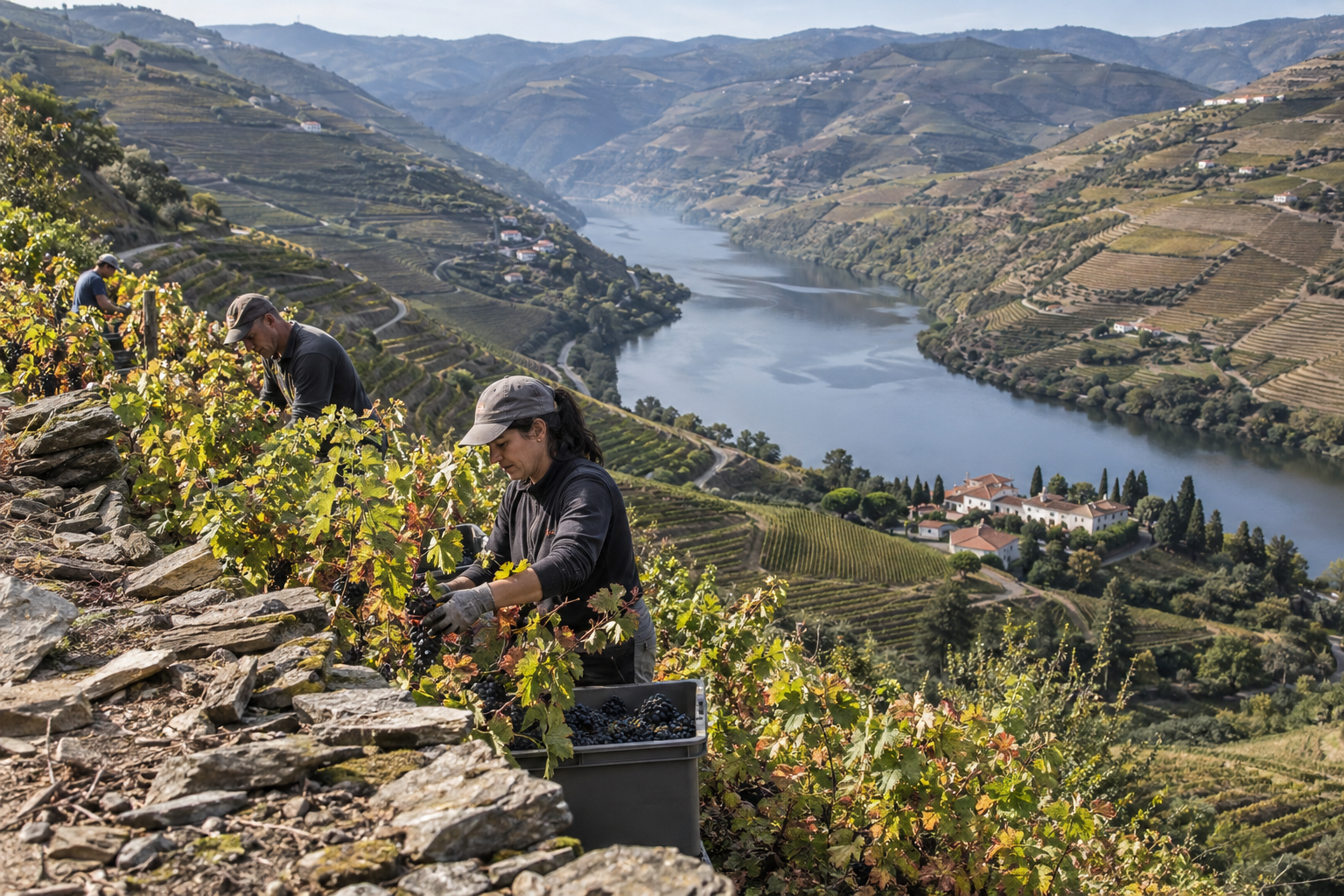
Its home is the Douro in northern Portugal, where vineyards trace the river and its tributaries across steep slopes. Further inland, the climate becomes drier and more continental, with hot summers and cold winters. Meanwhile, altitude, aspect and distance from the river create considerable differences between vineyards. The Douro is therefore not one uniformly hot site, but a mosaic of growing conditions.
Schist dominates the classic port-growing sites: a rock that splits into layers, allowing roots to seek water deep underground. Thin, stony soils and summer drought limit vine vigour. Taylor’s owns the celebrated Vargellas and Terra Feita estates, among others, but this LBV should not be confused with a vineyard-designated wine whose origins can be traced to a particular slope. The precise mix of vineyard sites for 2019 is not detailed here.
An old house behind a modern classic
Founded in 1692, Taylor’s is one of port’s historic merchant houses. Its identity is closely bound to long-lived Vintage Port, but the producer has also played a major role in the more approachable LBV style. In 1970, the house launched an LBV from the 1965 harvest, an important milestone for the modern category. That is more precise than saying Taylor’s invented all late-bottled port.
The underlying idea is practical: allow more of the maturation to take place before release. While Vintage Port is normally bottled after around two years, the rules for LBV allow bottling between the fourth and sixth years after harvest. Taylor’s describes its LBV as matured in large oak vats. There, the tannic grip gradually softens, while the relatively small surface area of wood per litre helps preserve the fruit. A pronounced new-oak flavour is not the aim.
The wine is based on traditional red Douro grapes. Touriga Nacional, Touriga Franca, Tinta Roriz, Tinta Barroca and Tinto Cão are among the region’s key port varieties; no confirmed percentage breakdown is given for this particular bottling. During the short fermentation, colour and tannins—the compounds responsible for astringency—must be extracted quickly from the skins. Grape spirit is then added to stop fermentation. Some of the grapes’ sugar remains at this point, which explains the sweetness.
Taylor’s standard LBV is filtered and intended to be served without the sediment management required by a mature Vintage Port. That does not make it the same wine in a simpler package, but a distinct style with different priorities.
The 2019 vintage: fruit with backbone
Producers’ harvest reports describe 2019 in the Douro as a dry growing season, but with a summer that was less intensely hot than several surrounding years. Such conditions can favour more even ripening and preserve freshness, although water availability and vineyard location are crucial. The vintage offered the conditions for concentrated, balanced ports; that does not mean every producer or every part of the valley fared equally well.
For Taylor’s LBV 2019, dark berry fruit is the natural starting point. The producer’s description emphasises a full-bodied, fruit-driven expression and a firm tannin structure. As a guide to the flavour profile, think blackberries and blackcurrants, followed by dark plums and spicy nuances. This is a summary of the wine’s described style, not an account of our own recent bottle tasting.
On the palate, the interplay matters more than a long list of aromas. Sweetness brings volume, alcohol warmth, and tannins a firm grip. The acidity need not feel like that of a dry red wine, but it helps keep the fruit lively. The finish should be lingering and fruit-driven rather than dominated by oak. Nuttiness and pronounced oxidative notes, by contrast, are chiefly hallmarks of tawny port, not the aim here.
Serve cool—and enjoy without a long wait
Serve at 15–17 °C in a tulip-shaped wine glass with room for the aromas to develop. A very small liqueur glass makes nuances harder to discern, while a warm room temperature can easily accentuate the alcohol at the expense of the fruit. Start towards the lower end of the temperature range; the wine warms quickly in the glass.
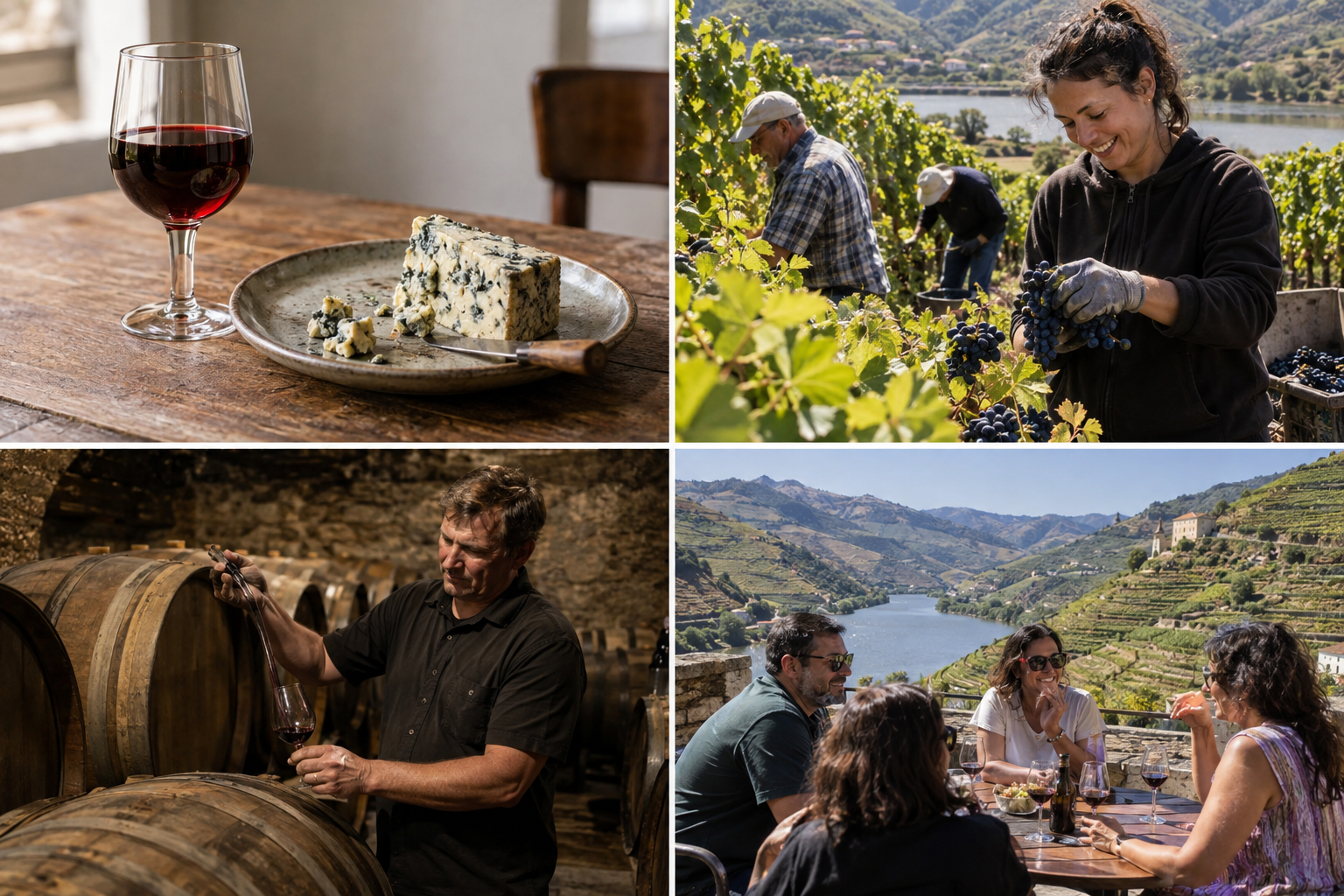
Routine decanting is not necessary. Try opening the bottle half an hour before serving and following how the aromas develop. The wine is made to be ready to drink when it leaves the house’s cellars, with no need for lengthy ageing. A well-stored bottle can keep for several years, but there is no obvious benefit in waiting until the berry fruit fades. Keep an opened bottle tightly sealed and cool, and ideally enjoy it within a few weeks.
For food, two clear directions are enough: blue cheese, whose saltiness meets the sweetness, or a moderately sweet dark chocolate tart. Serve a small measure of port. For those avoiding alcohol, unsweetened blackcurrant tea is a warming alternative alongside a winter-evening cheeseboard, though the balance of flavours will be different.
Tasting notes
- Dark berry fruit
- Plum
- Spicy nuances
- Full-bodied sweetness
- Firm tannin structure
Score 91/100. Provisional editorial assessment based on the producer’s description and the reputation of the house and vintage. The score is not based on verified critics’ ratings for this exact bottling or our own recent bottle tasting.
15–17 °C · Normally requires no decanting. Try opening 30 minutes before serving. · Tulip-shaped port glass or small white wine glass. Rough estimate of the usual market price for 750 ml: around $25. Not a verified current Systembolaget listing for the 2019 vintage.
- Blue cheese, such as StiltonThe cheese’s saltiness and richness meet the wine’s sweetness and dark fruit.
- Moderately sweet dark chocolate tartCocoa’s bitterness and roasted notes contrast with the port’s sweet berry fruit.
Sources
- Taylor’s, Taylor’s – Late Bottled Vintage och producentens historia
- Instituto dos Vinhos do Douro e do Porto, Portvinskategorier och ursprunget Douro
- Symington Family Estates, Årgångs- och skörderapporter från Douro (2019)
Ask questions about "Taylor’s LBV 2019 – dark fruit for a winter evening". Answers are based on the magazine's own articles.