How to Taste Wine in Five Steps
A simple lesson in looking, swirling, sniffing, tasting and assessing.
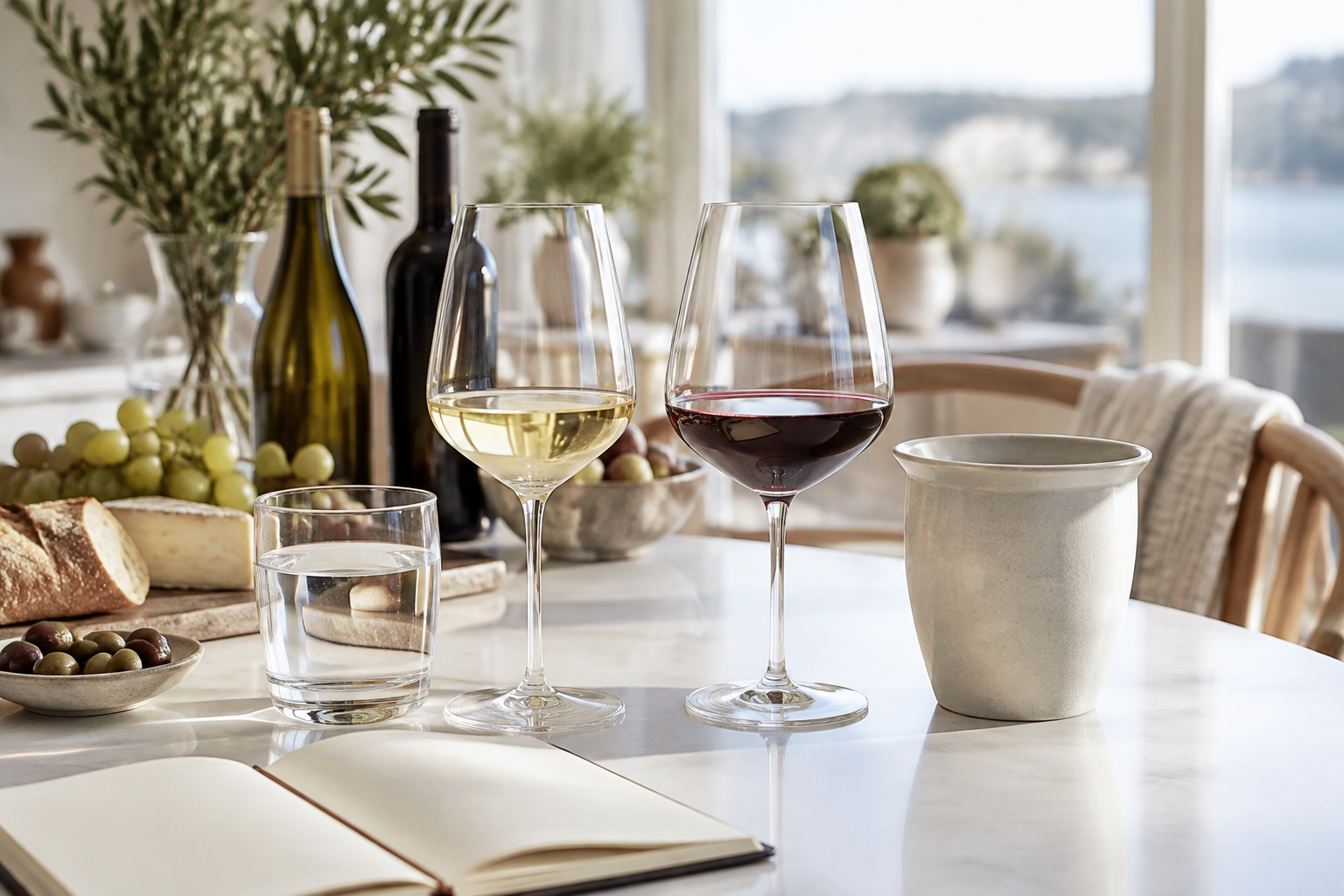
Two glasses stand on a white kitchen table. A pale white wine glints in one, a cherry-red wine in the other. You lift a glass and catch something familiar: green apple, perhaps blackcurrant. Then doubt creeps in—is that really what it smells like? Yes, that association is a good start. Wine tasting isn’t about guessing the right words, but noticing what’s actually in the glass.
Professionals work systematically so they can compare wines. The same method works at home: five steps and a few simple words after each glass.
1–2. Look and swirl
Choose a clean, clear glass that tapers towards the rim, and pour in about 4 cl. Avoid perfume and scented candles, and keep water and a spittoon to hand.
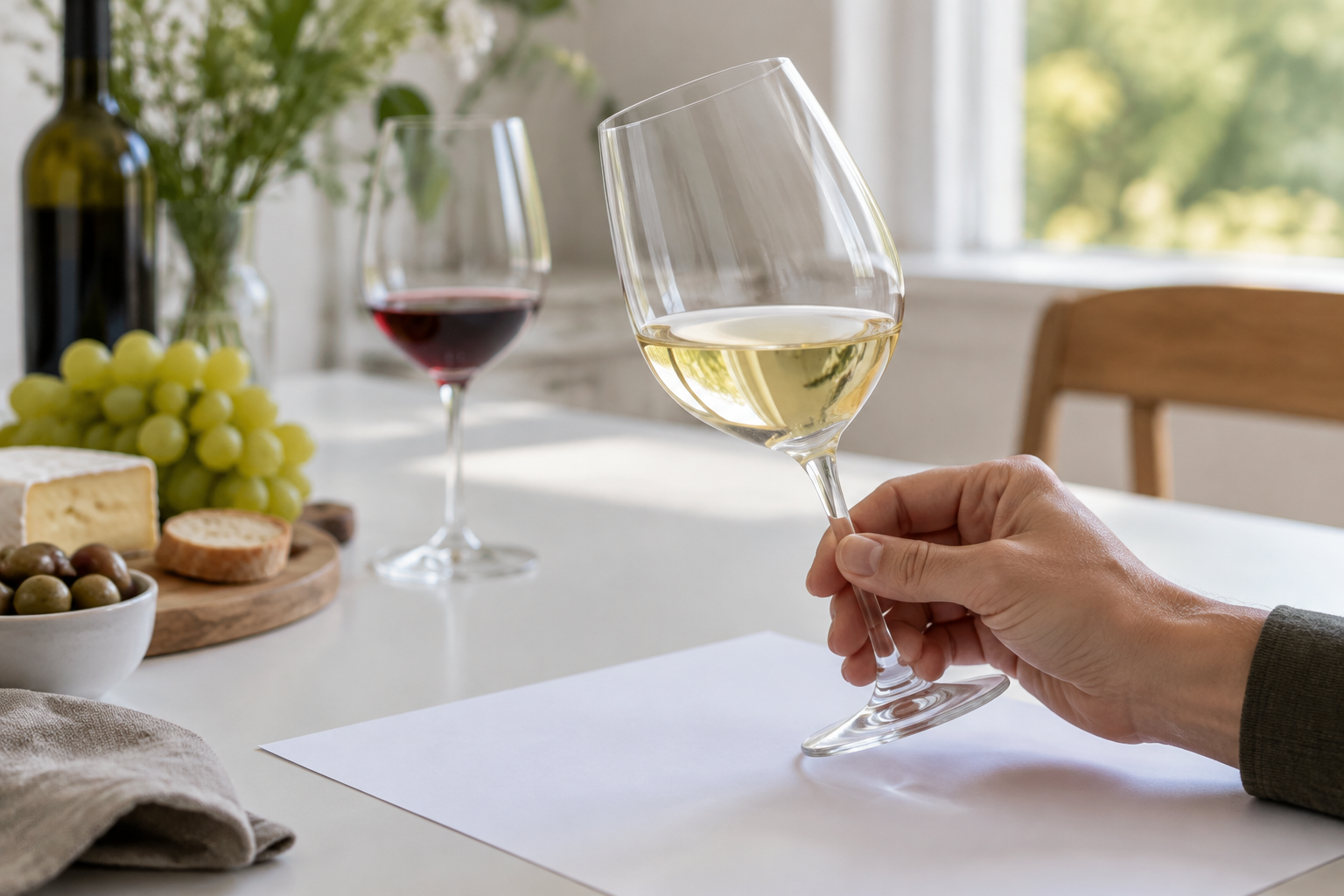
Step 1 – look. Tilt the glass against a sheet of white paper. Is the colour pale or deep? Does the white lean towards green or gold, the red towards purple or brick? Colour offers clues to grape variety and age, but no definitive answer about quality.
Step 2 – swirl. Keep the base of the glass on the table and move it in small circles. The air helps aroma compounds reach your nose. The “tears” on the inside of the glass, however, tell you nothing about quality—they are mainly the result of alcohol and surface tension.
3–4. Sniff and taste
Step 3 – sniff. Take two short, gentle sniffs. Start broad: fruity, floral, spicy or earthy? Then narrow it down: citrus might become lemon, dark berries might become blackberry. Two clear aroma descriptors are worth more than ten uncertain ones.
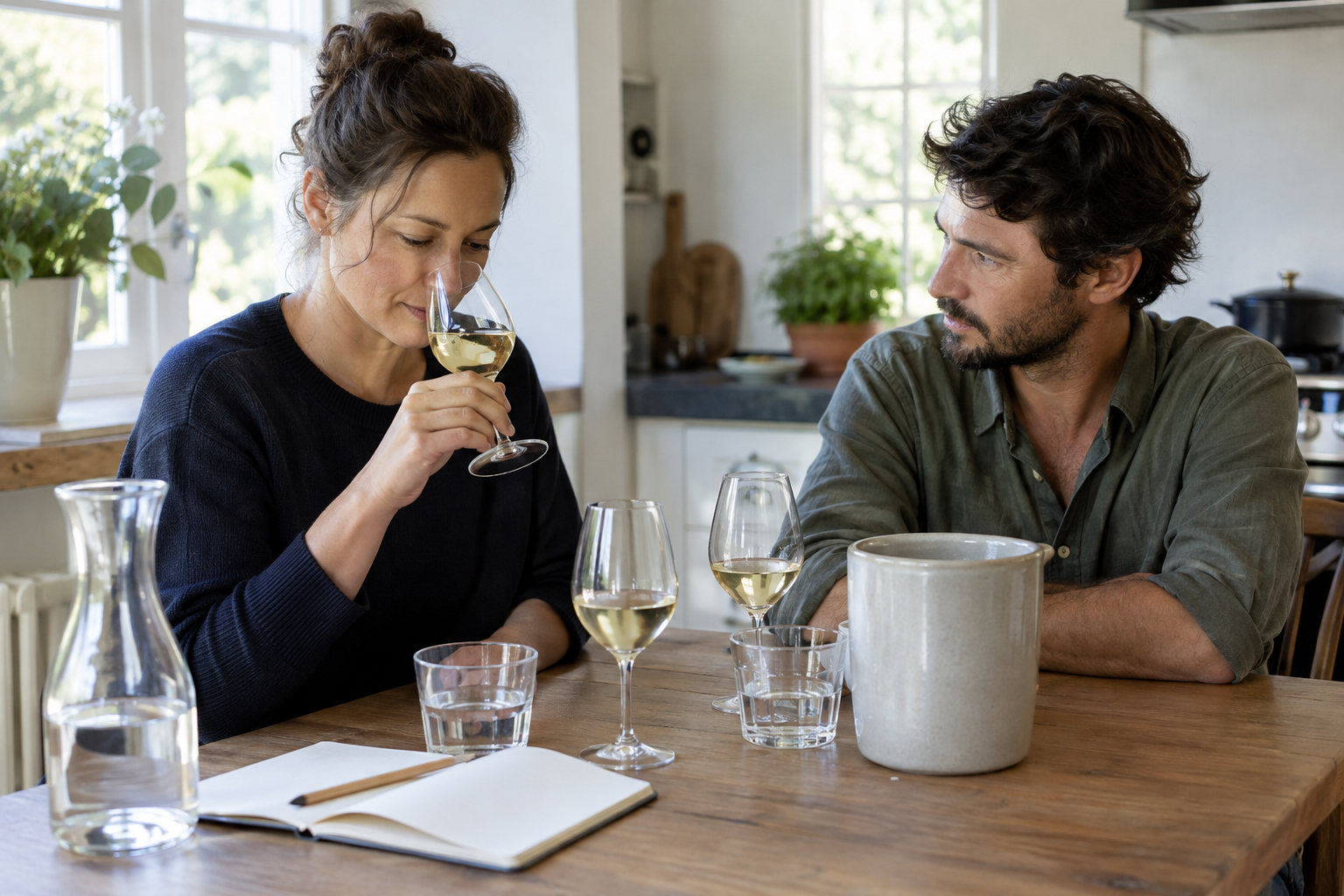
Step 4 – taste. Take a small sip and let it move around your mouth. First notice sweetness and acidity—acidity makes your mouth water. A fruity aroma is not the same as a sweet taste: a wine can smell of ripe pears and still be dry. Then look for tannins (a dry, astringent sensation like strong tea), body and warmth from the alcohol.
5. Assess—and practise at home
Step 5 – assess. Do the elements work together? Does the acidity feel fresh or sharp, the tannin pleasantly firm or drying? How long does the flavour linger? Distinguish between “well made” and “my favourite”, too—a wine can be balanced without being to your taste.
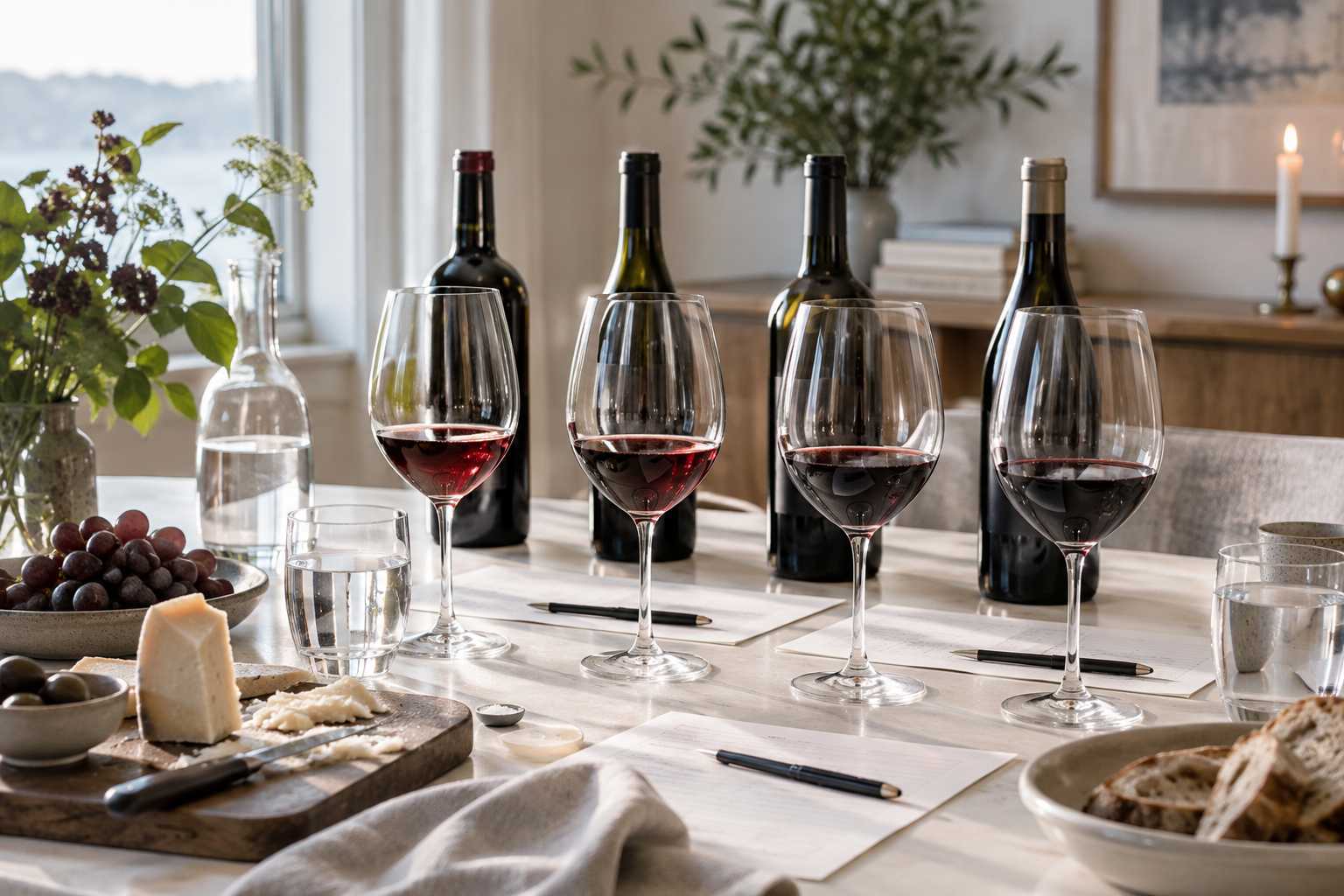
Home exercise: compare a dry sauvignon blanc with an oak-aged chardonnay, both at 10–12°C in identical glasses. Write down three things for each wine: an aroma, a sensation in the mouth and an overall impression. Then try them with a piece of mild hard cheese and see what changes. Let the wines warm up a little and compare again.
The most important tasting habit is curiosity, not how much is in the glass.
What goes with the glass
- FoodMild hard cheeseFat and salt offer a simple contrast to the wine’s acidity, without strong spices taking over.
- FoodBaked white fish with lemonA crisp, dry white wine matches the lemon’s acidity while allowing the fish’s delicate flavour to shine.
- FoodChicken with a mild cream sauceA fuller-bodied chardonnay suits the creamy sauce, while the wine’s acidity refreshes the palate between bites.
Sources
- Wine & Spirit Education Trust, Systematic Approach to Tasting
- Ronald S. Jackson, Wine Tasting: A Professional Handbook (2017)
- Julia Harding, Jancis Robinson och Tara Q. Thomas (red.), The Oxford Companion to Wine (2023)
Ask questions about "How to Taste Wine in Five Steps". Answers are based on the magazine's own articles.