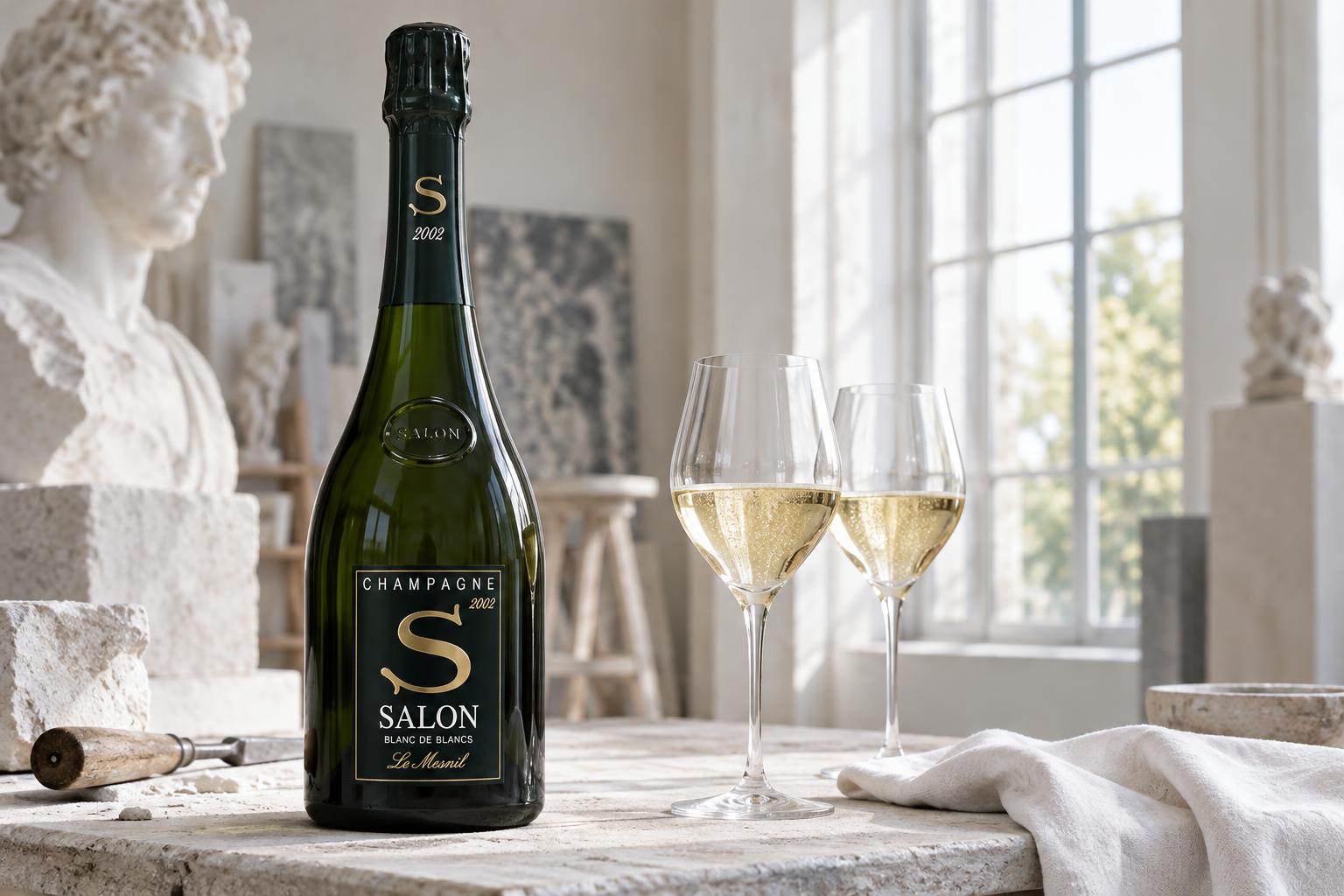
Salon 2002 – when Champagne becomes a wine for time
Cuvée S Le Mesnil Blanc de Blancs Brut · Champagne, France
★★★★★ · Drink now. Salon 2002 is Chardonnay from a single grand cru village, with the power to age for decades and the precision to reward attention. A documented European listing is €1,300 for 75 cl; Swedish pricing and availability are unverified. James Suckling awarded the vintage 99 out of 100.
- Producer
- Champagne Salon
- Wine
- Cuvée S Le Mesnil Blanc de Blancs Brut
- Vintage
- 2002
- Type
- Champagne
- Origin
- Le Mesnil-sur-Oger Grand Cru, Côte des Blancs, Champagne, Frankrike
- Grapes
- Chardonnay (100%)
- Serve at
- 13–15°C according to the producer’s vintage sheet
- Air
- Editorial advice: no routine decanting; taste first and allow gentle development in the glass.
Translated from Swedish with AI assistance. Prices converted at 10 SEK = 1 USD.
Some Champagnes make an evening festive; others change the way we think about wine. Salon Cuvée S Le Mesnil Blanc de Blancs Brut 2002 belongs to the latter group. Here, bubbles are not the entire story, but a means of carrying a concentrated white wine through time. The vintage combines ripe generosity with the linear, energetic style that has made Salon a benchmark for blanc de blancs. Reputation cannot guarantee every bottle, however: after more than two decades, storage, transport and the condition of the closure matter enormously.
One grape, one village – not one single vineyard
Aimé Salon’s early twentieth-century vision was unusually uncompromising: one grape, Chardonnay; one area, the Côte des Blancs; one grand cru village, Le Mesnil-sur-Oger; and one vintage. The house makes vintage Champagne in selected years rather than an annual non-vintage blend. This does not make Salon a single-vineyard wine. The producer describes its small “Salon garden” plot alongside nineteen other small sites within the village.
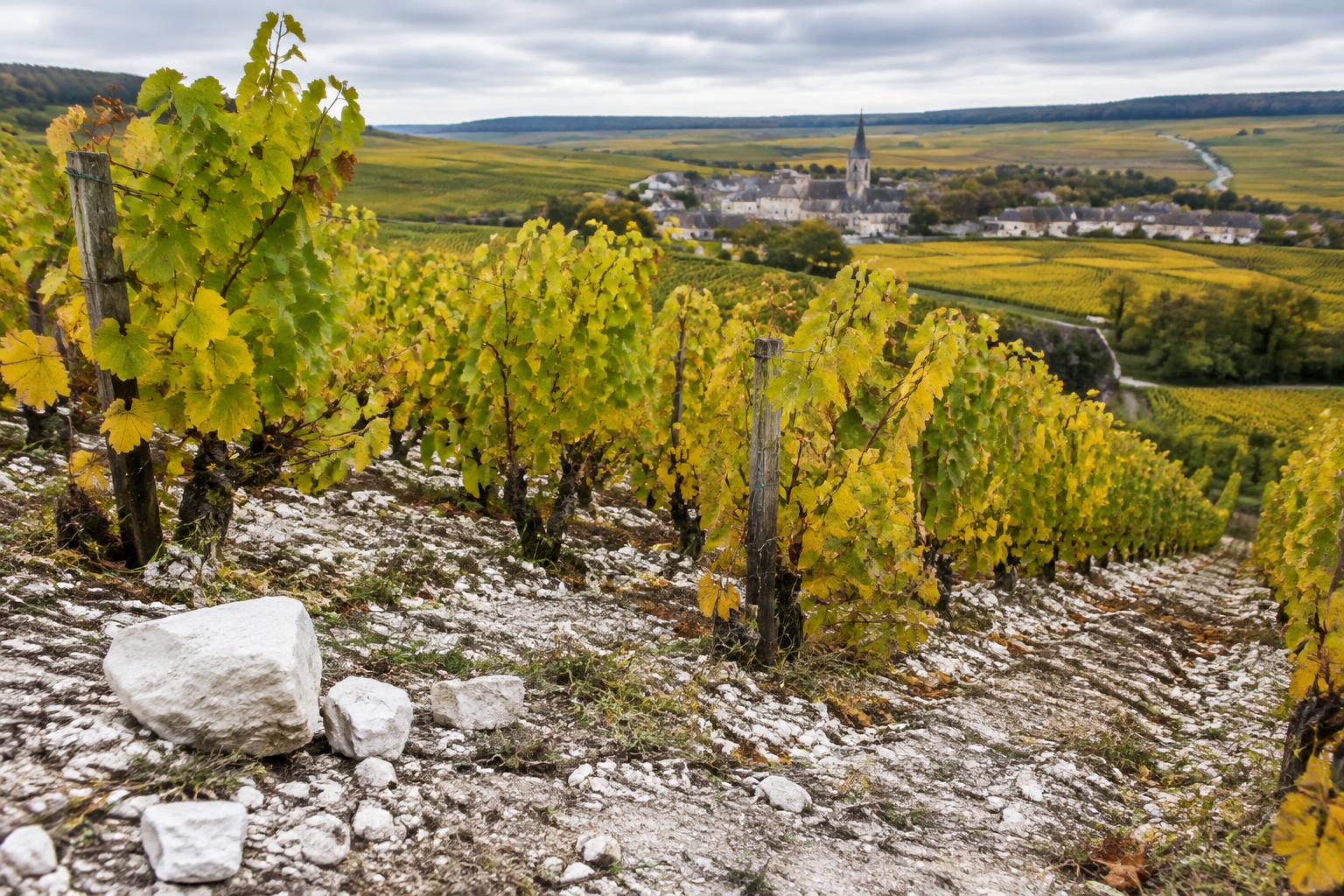
Le Mesnil’s chalk-rich soils and cool growing conditions provide an important context. Chardonnay can deliver both tension and substance here, rather than lightness alone. When tasters describe chalk or minerality, they are describing a sensory impression, not literal chalk dissolved in the glass. Salon expresses its origins through focused acidity, finely drawn structure and an ability to sustain prolonged maturation without losing its outline.
The 2002 vintage: richness with a backbone
The producer’s vintage sheet describes unsettled conditions, but no severe frost, devastating rain or significant hail damage. Flowering suggested a generous crop. Warm summer days subsequently helped concentrate the fruit and restore balance. Harvest began in Le Mesnil-sur-Oger on 16 September, under clear skies in cooler weather. The resulting Chardonnay is described as rich and powerful, yet retaining refinement and precision.
Time in the cellar was another essential ingredient. James Suckling reports approximately eleven years on the lees before disgorgement and release; the 2002 reached the market in 2014. During bottle maturation, contact with the lees contributes to aroma and texture. This helps explain how such a wine can feel creamy without sacrificing its underlying freshness or the energy that defines the house style.
Dosage should not be presented as a settled number here: published figures for the 2002 differ. The word Brut does not mean there is no added sugar. A separate, limited zero-dosage version was reported, but should not be confused with the conventional release. For a collector’s bottle, disgorgement information and documented storage are more useful than vague assurances of “perfect condition”.
What should we expect in the glass?
The producer describes orange blossom, candied citrus and freshly baked madeleine cakes, followed by a long, straight and energetic palate. Suckling’s assessment emphasises citrus, chalky impressions, intensity and acidity. Further bottle ageing may allow nutty and toasted nuances to become more prominent. That is an expectation of development, not our own tasting note for a bottle opened today.
The score in the facts panel is explicitly attributed: 99/100 from James Suckling, not a score awarded after an editorial tasting. Other assessments provide useful perspective: Antonio Galloni/Vinous awarded 97 and William Kelley/The Wine Advocate 95, as reproduced by merchants. These differences illustrate that outstanding quality does not produce identical judgements. Tasting date, individual bottle and personal preference all play a part.
Drink now is a reasonable choice for a properly stored 2002, not a suggestion that it must be consumed immediately. Reproduced critic windows extend to 2035 and 2042 respectively, but are guidance rather than guarantees. Buy with traceable provenance where possible, checking fill level, evidence of leakage and storage history. A prestigious label cannot repair damage caused by heat or poor handling along the way.
Serve the wine, not the ceremony
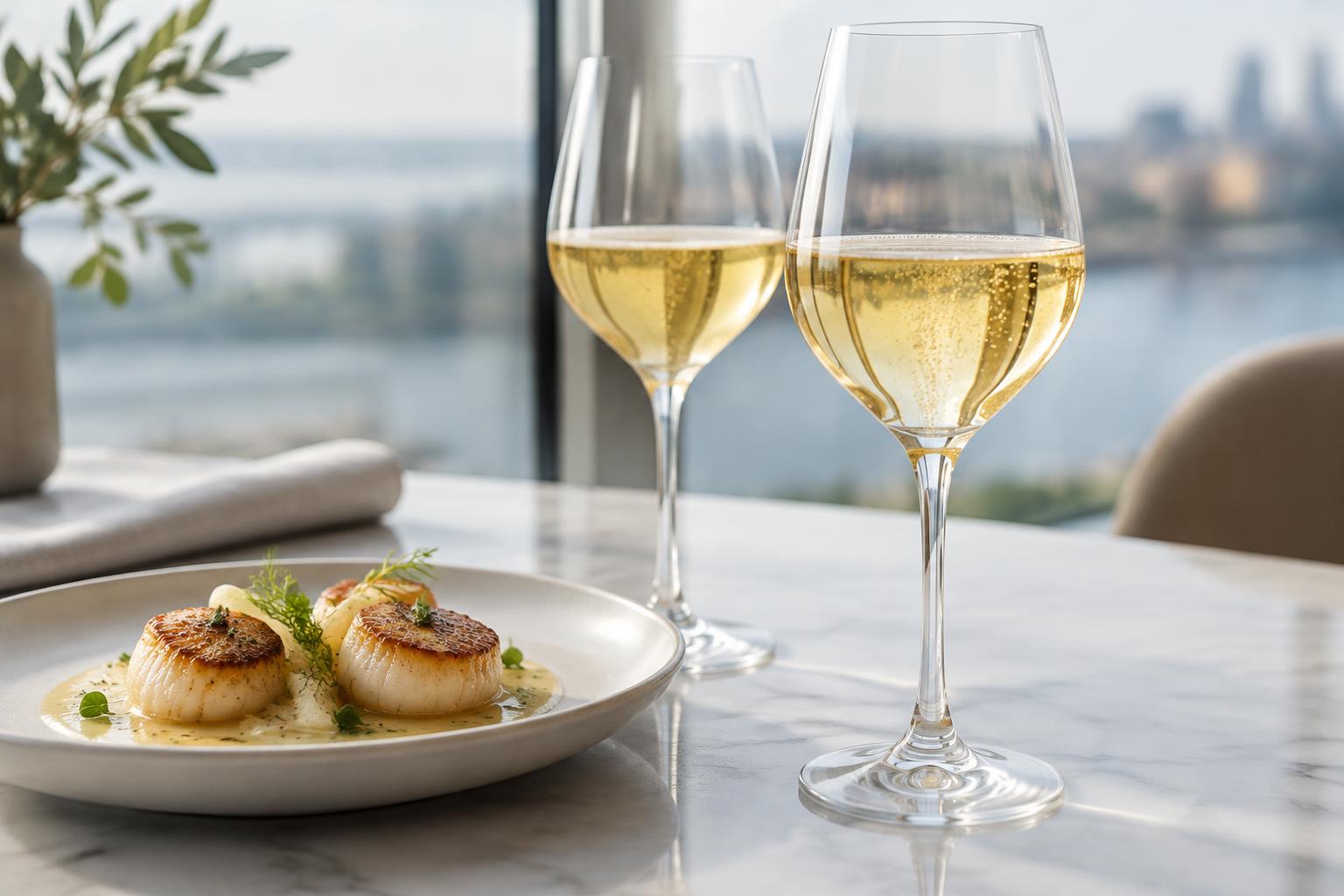
Salon’s own vintage sheet recommends 13–15°C, warmer than many people expect for Champagne. Let the wine evolve in the glass rather than keeping it ice-cold throughout dinner. A tulip-shaped white-wine glass is our practical suggestion: it leaves room for aroma while concentrating it more effectively than a broad coupe. Modest pours make it easier to follow the changing balance as the wine warms.
We do not recommend routine decanting for Champagne of this age. Open gently, pour and taste first; let the glass provide the initial aeration. Scallops with a restrained butter sauce or chicken in a mild cream sauce make sensible partners. The producer mentions both shellfish and Bresse chicken with cream: salt, umami and soft richness can meet the wine’s acidity and mature depth without taking over.
Price also deserves scrutiny. On 7 November 2026, WineRL’s listing showed €1,300 for a 75 cl bottle. The facts panel’s approximately $1,430 is an illustration only: first €1,300 converted at an assumed SEK11 per euro, then the magazine’s fixed SEK10 = US$1 display convention. It is not a verified US or Swedish offer or a live exchange rate; shipping and any applicable charges are additional. No exact 2002 listing could be verified at Systembolaget, so its product number and link remain blank. Salon is a great wine, but its value lies in a well-preserved bottle and an attentive occasion, not in the price tag alone.
Tasting notes
- Candied citrus
- Orange blossom
- Madeleine and mature bread notes
- Chalky, focused impression
- Long, energetic finish
Score 99/100. James Suckling, 99/100 in March 2014 for Salon 2002. Not an editorial tasting. Galloni/Vinous 97 and Kelley/Wine Advocate 95 reproduced by Four Walls.
13–15°C according to the producer’s vintage sheet · Editorial advice: no routine decanting; taste first and allow gentle development in the glass. · Editorial suggestion: tulip-shaped white-wine glass. Illustrative approx. $1,430: WineRL lists 75 cl at €1,300 (checked 7 November 2026), converted at an assumed SEK11/euro, then the magazine’s SEK10 = US$1 convention. Not a live exchange rate or a verified Swedish/US selling price; shipping/charges excluded.
- Scallops with a mild butter sauceSalt and gentle richness meet the acidity and mature texture without dominating.
- Chicken in a mild cream sauceThe producer mentions Bresse chicken with cream; gentle umami and richness suit the wine’s power and freshness.
Sources
- Champagne Salon, Champagne Salon 2002 – producentens årgångsblad
- Champagne Salon, Salons ursprung och koncept
- James Suckling, 2002 Salon: Perfection – 99 poäng (2014)
- Decanter, Champagne Salon labels 2002 release one of best ever (2014)
- Four Walls Wine Co., Salon 2002 – återgivna omdömen och drickfönster
- WineRL, Salon 2002 75 cl – listpris 1 300 euro, kontrollerat 7 november 2026 (2026)
Ask questions about "Salon 2002 – when Champagne becomes a wine for time". Answers are based on the magazine's own articles.