How to Serve Wine Properly
A simple lesson in temperature, glass and air.
It is six in the evening, the guests have just arrived and the bottle is waiting in the fridge or the cellar. Someone asks: should it get some air? The answer depends on the wine and on how much time you have. Serving matters more than most people think — the same bottle can taste fresh and precise or heavy and flat depending on temperature, glass and how long it is allowed to breathe.
Temperature is the biggest dial
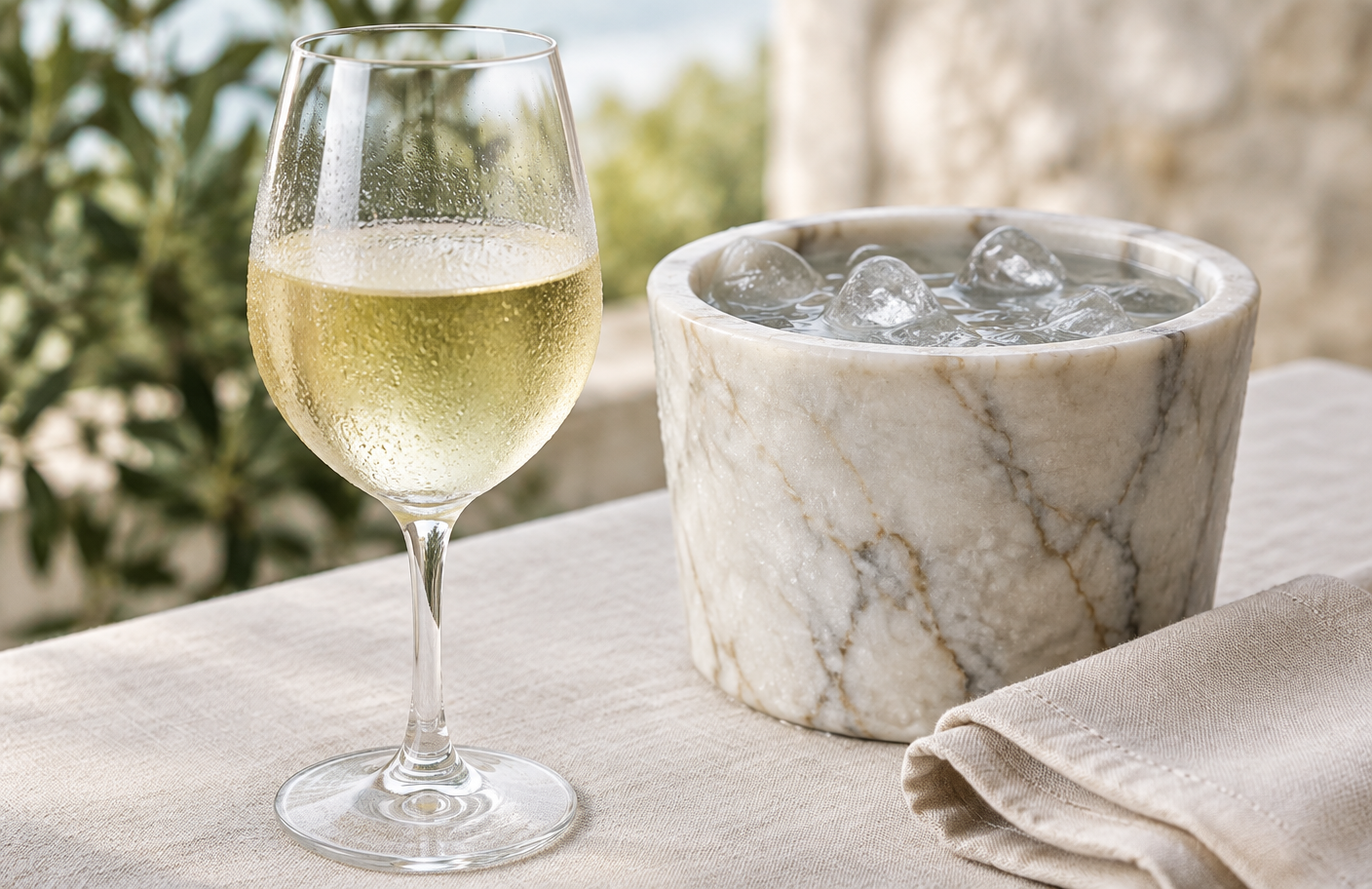
Too cold hides the aromas and pushes forward acidity and astringency. Too warm makes alcohol and sweetness insistent, and the wine loses its shape. A rich, dark red may need a couple of hours out, while a young, fruity red is often ready straight away. A simple routine: leave the red on the table while you set the place, and chill a light, fruity red in iced water for five to ten minutes if it feels warm. Bubbles and sweet wines cope with cold better; dry wines become stricter.
The glass steers the nose
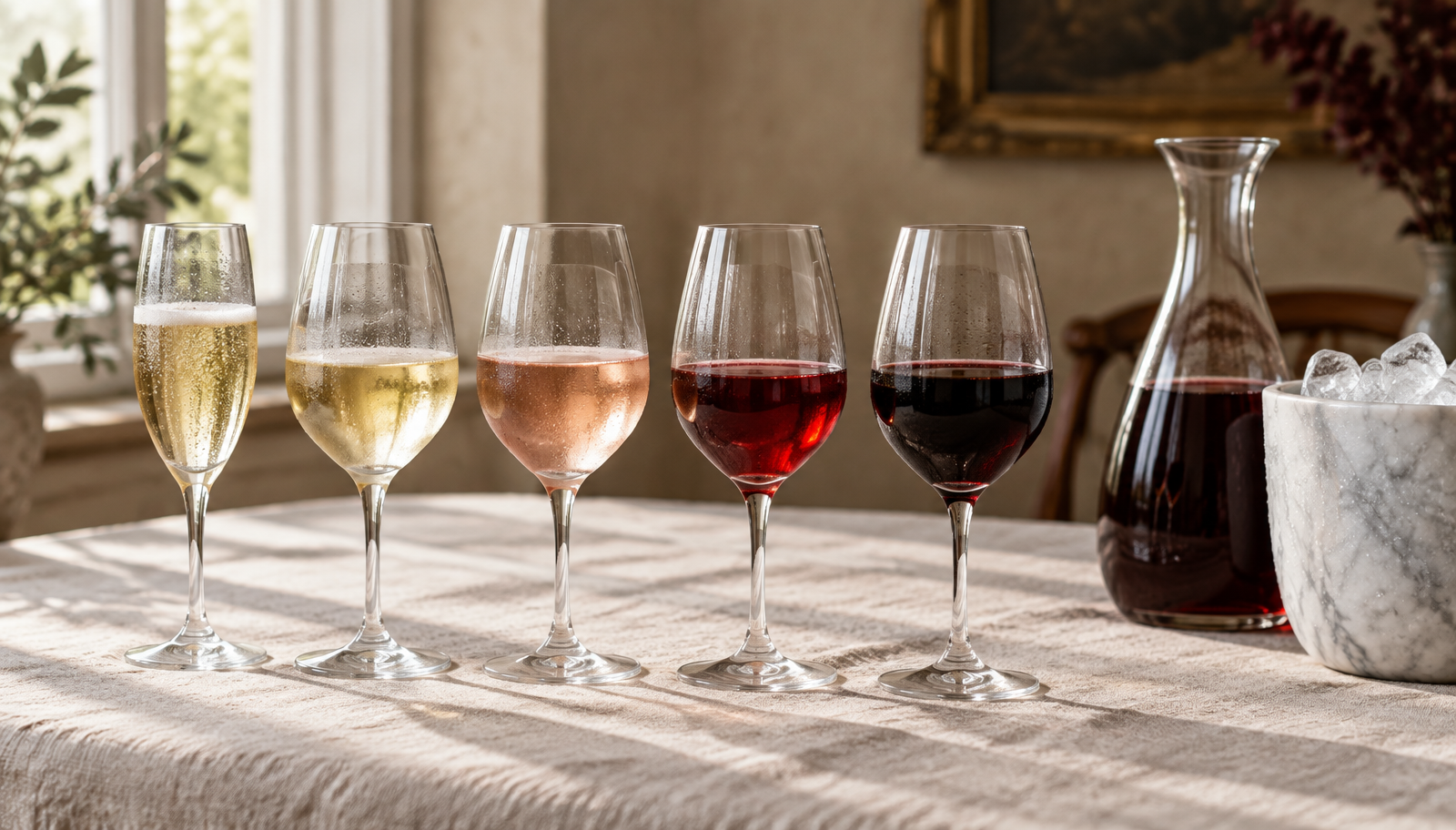
Size and shape decide how much surface the wine gets and where the aromas collect. A glass that narrows at the top gathers the scents, a large round glass gives a full red more air than a narrow one, and bubbles want a tall, slim glass so the mousse holds. It is easy to test at home: pour the same wine into two different glasses and compare after ten minutes. The bigger glass usually gives more aroma — but not always more pleasure.
Air and order
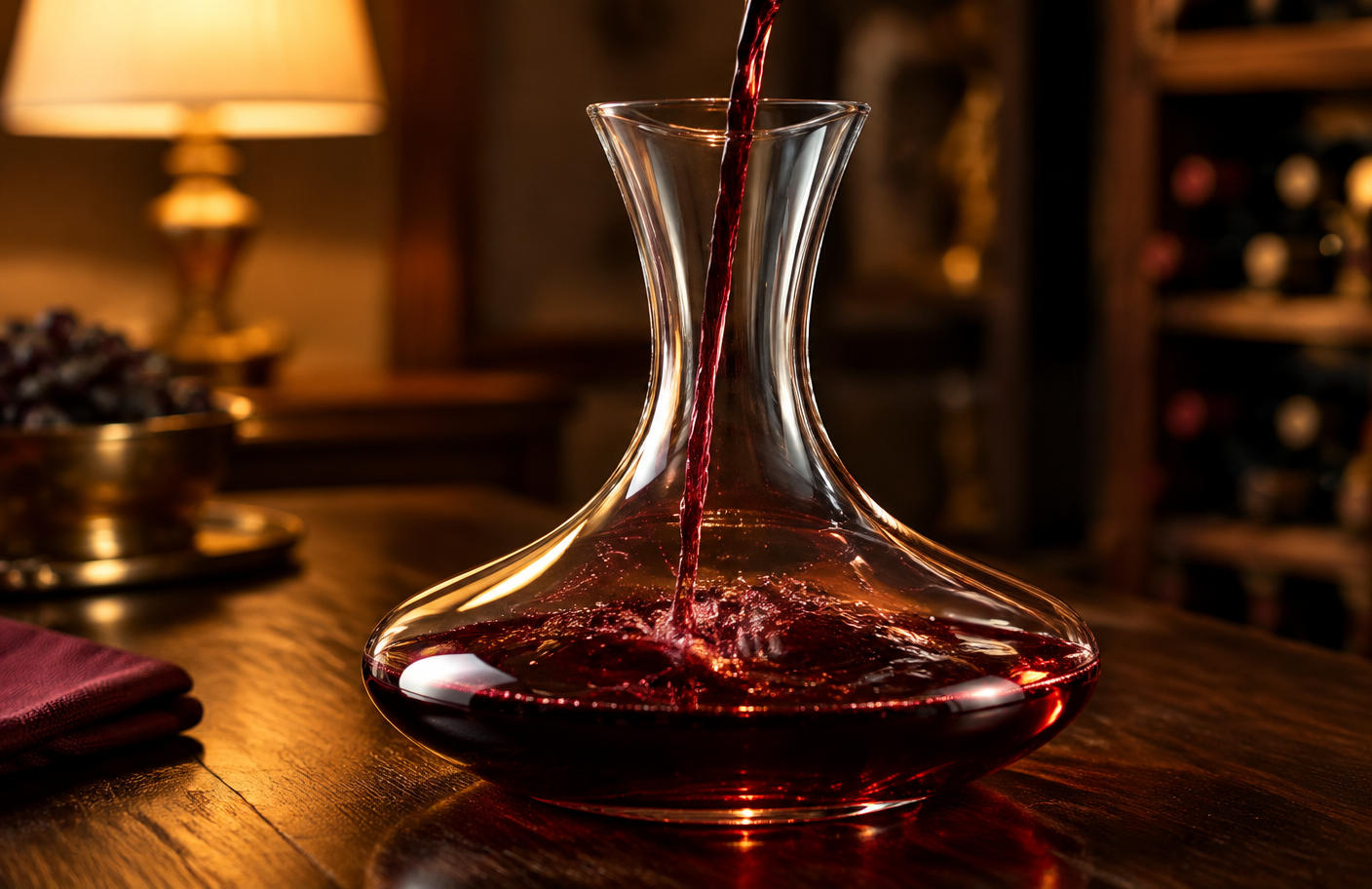
Air can soften a young, grippy wine, but it can also tire an older one. Sediment is a different question from aeration: pour slowly, stop just before the sediment reaches the neck, and decant in two goes. A delicate old wine should not be decanted out of habit — taste it from the glass first, then decide.
One rule that is easier than it sounds: start lighter and work towards heavier, dry before sweet, young before old, white before red. That way the heavy wine does not steal the fire from the light one, and every wine gets to show its best side.
Homework
Chill a white wine for three hours, pour half a glass and leave the rest at room temperature for twenty minutes. Notice what happens to the aroma. Then do the same with a red: one glass straight from the fridge, one that has been standing. Write three words per glass — one aroma, one feeling in the mouth, one overall impression. Within a few evenings you will have your own numbers, which are worth more than any answer key.
Serving is no snobbery. It is a way of giving the wine the conditions that let you hear what it has to say.
What goes with the glass
- FoodMild hard cheeseFat and salt make it easy to hear the difference between a wine that is too cold and one that is just right.
- FoodDark chocolateThe sweetness of the chocolate shows why sweet wines cope with cold better than dry ones.
Sources
- Jancis Robinson (red.), The Oxford Companion to Wine
- Kevin Zraly, Windows on the World Complete Wine Course
- Wine & Spirit Education Trust, Systematic Approach to Tasting
Ask questions about "How to Serve Wine Properly". Answers are based on the magazine's own articles.