Muga Reserva 2020 – Rioja’s Classic Balance
Cherries, spicy oak and the craftsmanship behind a familiar label
Muga Reserva 2020 from Bodegas Muga shows why classic Rioja still deserves wine lovers’ attention. Tempranillo’s fruit, the freshness of the Haro area and an unusually consistent approach to oak come together in a wine that values balance over grand gestures.
Drinking window: 2026–2032 · Peak: 2026–2030
- Producer
- Bodegas Muga
- Wine
- Muga Reserva
- Vintage
- 2020
- Type
- Rött
- Origin
- Rioja Alta (Haro), DOCa Rioja, Spanien
- Grapes
- Tempranillo 70 %, Garnacha 20 %, Graciano 5 %, Mazuelo 5 %
- Serve at
- 16–18 °C
- Air
- Aerate in a decanter for 30–60 minutes; the wine can take a couple more years of ageing
Translated from Swedish with AI assistance. Prices converted at 10 SEK = 1 USD.
It is easy to walk past a familiar wine in search of the next discovery. Muga Reserva deserves the opposite: a moment to pause and explore why it works. The 2020 vintage offers an interesting opportunity to revisit classic Rioja, where fruit, acidity, tannins and oak should speak with roughly equal voices. Neither thin and nostalgic nor a show of concentration with oak as the main attraction.
For Swedish Rioja lovers, Muga is an established name. Calling it one of Systembolaget’s best-loved wines, however, would require consumer or sales data. The more interesting question is what makes this bottle relevant even once you have begun exploring individual vineyards and smaller producers. The answer lies in craftsmanship and the ability to bring several origins together into a coherent whole.
Haro: where freshness has room to shine
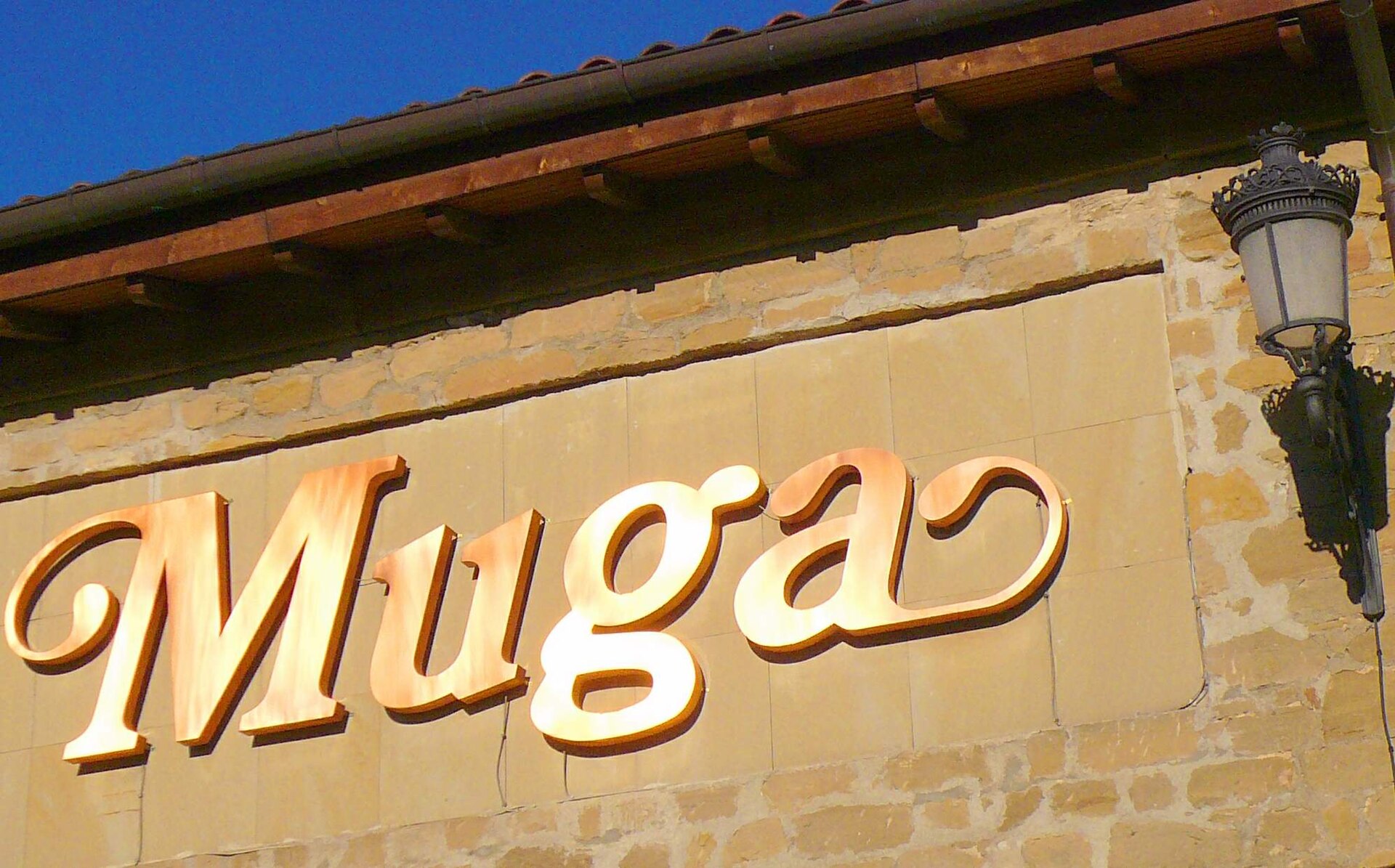
Bodegas Muga is based in Haro’s station district, Barrio de la Estación, in Rioja Alta. Here in western Rioja, the Atlantic influence is more pronounced than in the region’s warmer eastern reaches. The surrounding mountain ranges affect both rainfall and winds, while differences in altitude and aspect create considerable variation between vineyards. Rioja is therefore not one uniformly hot, dry landscape, nor does Rioja Alta have a single flavour profile.
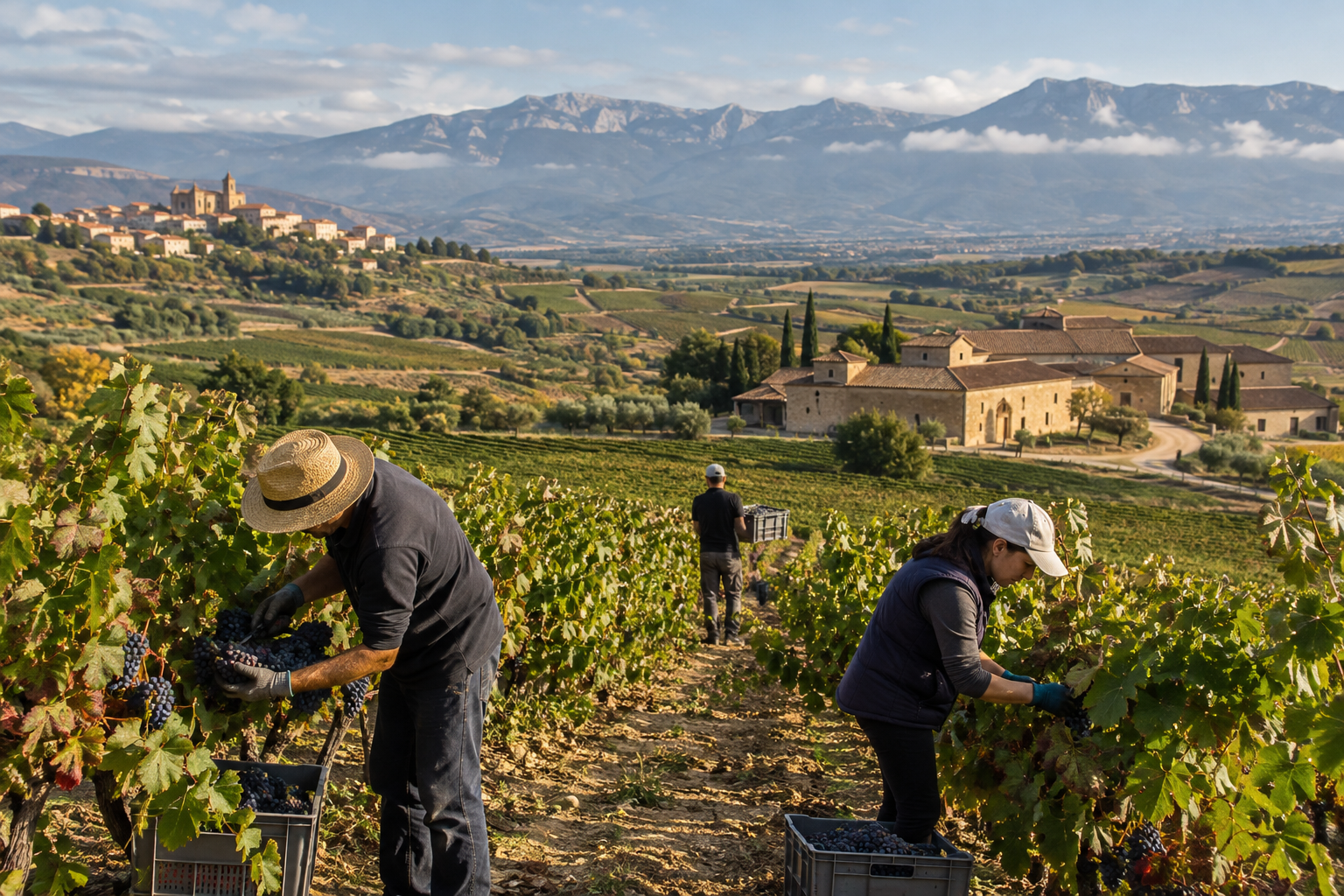
Clay- and limestone-rich soils are important for Muga’s red wines. Clay can help the soil retain water, while lime content, soil depth and drainage affect how the vines grow and their grapes ripen. This does not mean that you can literally taste the limestone in the glass. What matters is how the site helps grapes reach ripeness without losing freshness.
Reserva is not a wine from a single named site. We should therefore be cautious about assigning a particular altitude, slope or soil profile to the 2020. Its identity lies in the combination of grapes from several sites and the producer’s selection. Where a single-vineyard wine seeks to pinpoint a place, Muga Reserva works towards balance between different elements. That is a different ambition, not automatically a less serious one.
The Muga family and the importance of wood
Bodegas Muga was founded in 1932 by Isaac Muga and Aurora Caño. The company remains family-owned and has built its identity around traditional methods applied with considerable technical precision. Here, tradition does not mean treating every vintage mechanically in the same way, but retaining certain tools and principles because they work.
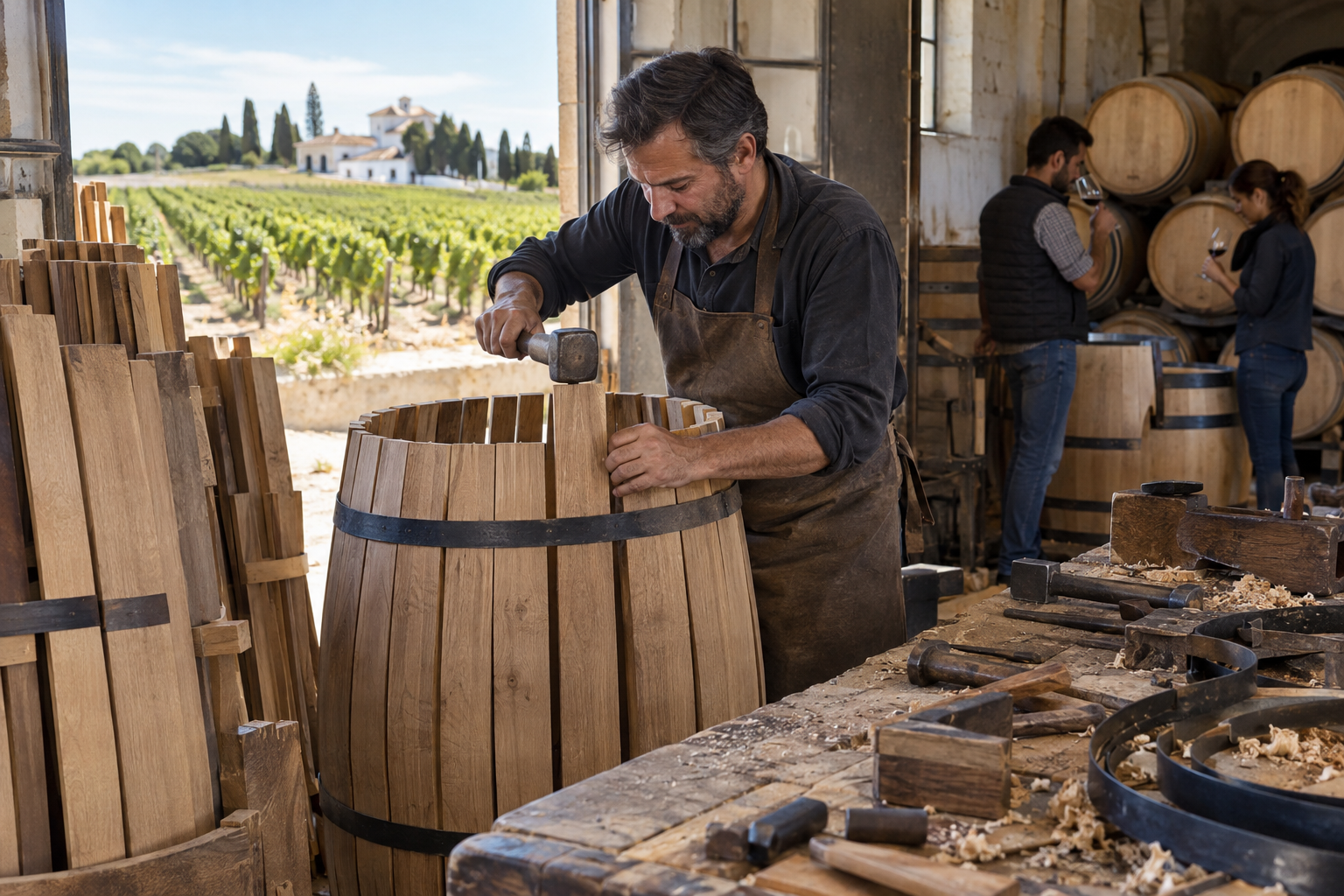
The clearest example is its own cooperage. Muga is among the relatively few wine producers that still employ in-house coopers. This allows close attention to the wood’s origin, seasoning and toasting. Toasting involves heating the inside of the barrel, which affects the aromas the wood can contribute. Vanilla, toasted spice and smoky notes are therefore not simply a matter of how long the wine spends in barrel.
This direct control does not automatically make every barrel better. It does, however, give the producer more scope to tailor the wood to the wine. A barrel also influences structure through the slow introduction of oxygen and the interaction between compounds in the wine and the wood. Muga’s strength is when that process comes across as a cohesive mouthfeel rather than a separate, tacked-on oak flavour.
The grapes, fermentation and the journey through the cellar
Muga Reserva is based on tempranillo, alongside garnacha, mazuelo and graciano. Tempranillo provides the backbone: cherry fruit, firmness and the ability to develop with age. Garnacha can contribute roundness and more generous fruit, while mazuelo and graciano can bring acidity, structure and aromatic lift. Exact proportions should be tied to the vintage’s technical specifications, not borrowed from another year.
The producer describes fermentation with naturally occurring yeasts in wooden vats. During fermentation, the grapes’ sugar is converted into alcohol, while colour and tannins are extracted from the skins. Tannins are the compounds that create a dry, slightly astringent sensation against the gums. How the skins are handled therefore has a major bearing on whether the finished wine feels firm and finely woven or hard and angular.
Muga specifies around two years of barrel ageing for Reserva, with both French and American oak playing a part in the house’s approach. This is followed by egg-white fining and further bottle ageing before release. The egg whites help bind particles and some astringent compounds so that they can be removed. The method is traditional, but it also means the wine should not be described as vegan.
Reserva is also a regulated designation. For red Rioja, it requires at least three years of total ageing, including at least one year in oak barrels and at least six months in bottle. This is a minimum, not a complete description of Muga’s method or a guarantee that all reserva wines taste alike. The producer’s own choices matter at least as much as the word on the label.
The 2020 vintage: promising conditions, important selections
Rioja’s regulatory body rated 2020 “Muy Buena”, or very good. This is a positive assessment of the region, but not a claim that every vineyard or wine was equally successful. The year was marked by an early growing cycle and periods of damp weather that called for greater vigilance in the vineyards. Summer heat and local weather variations made harvest timing and grape selection important.
For this bottle, it is wiser to see the vintage as background rather than a ready-made explanation of its flavour. Without detailed information about each contributing vineyard, it is impossible to say exactly which rainfall or temperatures shaped its balance. A year of varied conditions does, however, give a producer such as Muga reason to draw on both its experience and its ability to blend different lots.
The 2020 vintage is therefore interesting for more than its official quality rating. It also raises the question of how well the producer has preserved the fruit’s energy through a long maturation in the cellar. For a reserva, this is crucial: barrel ageing should make the wine more complex, not remove what made the grapes vibrant in the first place.
The character: fruit first, then spice
This article is not based on a verified tasting of the 2020 by us. The flavour profile should therefore be read as a cautious description based on the producer’s presentation and the wine’s established style, not as a tasting note from a freshly opened bottle. At its core is ripe red and dark cherry fruit, surrounded by plum, vanilla and spicy, lightly toasted oak notes.
What matters is how these components relate to one another. In a successful Muga Reserva, the fruit should have enough presence to carry the oak. Acidity brings movement and keeps the flavour from settling into sweet-seeming oak notes. The tannins contribute grip, but the aim is firmness rather than a drying finish. The body is closer to medium-to-full than heavy and massive.
Length should be judged by what remains, not just how long the sensation lasts. Cherries, spice and sustained freshness are more interesting than a lone toasted note. With further bottle development, the fruit may be joined by dried herbs, tobacco and leather. These are possible signs of evolution, not a promise that every bottle already displays them.
The Wine's combined tasting score is 92 out of 100, based on what critics have given the 2020: Wine Advocate and Tim Atkin 93, Jeb Dunnuck, Vinous and James Suckling 92, and Wine Spectator 91. Sweden's Munskänkarna gave it 15 out of 20 and 'more than good value'. Luis Gutiérrez of Wine Advocate describes a gentler vintage with fine tannins and integrated oak, while Tim Atkin highlights its structure and black cherry and gives it life until around 2032.
Serve cool and give the bottle time
Start at 16–18 °C, preferably towards the cooler end of the range. An overly warm glass accentuates the sensation of alcohol and can make the oak more dominant. Choose a generous red-wine glass with a gently tapered rim; a standard Bordeaux glass works well. No specialist glass is needed to find the wine’s balance.
Consider opening the bottle about an hour before serving. Taste it first and, if the wine seems closed, decant for 30–60 minutes as needed. Aeration is a tool, not a compulsory ritual. A well-stored 2020 should be rewarding now and continue to develop for several years. A further three to eight years of ageing is a reasonable, cautious possibility, but storage and personal taste matter more than a precise final year.
Two clear directions are enough when it comes to food: roast lamb with rosemary, where fat and a browned crust meet tannins and spice, or porter-braised beef with a moderately sweet sauce. In the latter case, the savoury depth of the meat connects with the wine’s darker notes; an overly sweet sauce, however, can make it seem more austere.
In Systembolaget's order range the wine has been listed at $24.90 (item no. 73711) – check the current price and vintage before ordering. Check the vintage when buying, too. Ultimately, Muga’s point is not to surprise with every sip, but to let fruit, freshness and ageing pull in the same direction. That kind of effortless harmony is worth rediscovering.
Tasting notes
- Ripe cherry fruit
- Plum
- Spicy oak
- Vanilla
- Fresh acidity
- Firm tannins
Score 92/100. Overall assessment of published critics’ scores: Wine Advocate 93, Tim Atkin 93, Jeb Dunnuck 92, Vinous 92, James Suckling 92, Wine Spectator 91. Munskänkarna awarded 15/20 and “More than good value”. Critics suggest a drinking window of approximately 2024–2030.
16–18 °C · Aerate in a decanter for 30–60 minutes; the wine can take a couple more years of ageing · A generous Bordeaux glass or another red-wine glass with a tapered rim. Systembolaget item no. 73711, available to order, $24.90 (according to Munskänkarna’s December 2024 tasting; check the current price).
- Roast lamb with rosemary and roast potatoesThe lamb’s fat and browned crust meet the wine’s tannins, while the rosemary echoes its spicy character.
- Porter-braised beef with a moderately sweet cream sauce ↗The savoury depth of the meat and the rounded richness of the sauce suit the fruit and oak spice. Keep the sweetness restrained so the wine does not seem unnecessarily austere. Recipe at Mat & Dryck.
Sources
- Bodegas Muga, Bodegas Muga – producentens information om vinerna, historien och tunnbinderiet
- Consejo Regulador de la DOCa Rioja, Rioja – ursprung, lagringskategorier och officiella årgångsbedömningar
- Systembolaget, Systembolaget – sökning efter Muga
- Munskänkarna, Muga Reserva 2020 – bedömning (2024)
- Muga Rioja Reserva 2020 – kritikerbetyg (Wine Advocate, Tim Atkin, Jeb Dunnuck) (2024)
Ask questions about "Muga Reserva 2020 – Rioja’s Classic Balance". Answers are based on the magazine's own articles.