G.D. Vajra Albe 2020 – Barolo with Bright Fruit and a Long View
Nebbiolo from high-altitude vineyards, where floral notes and freshness meet a firm tannic grip.
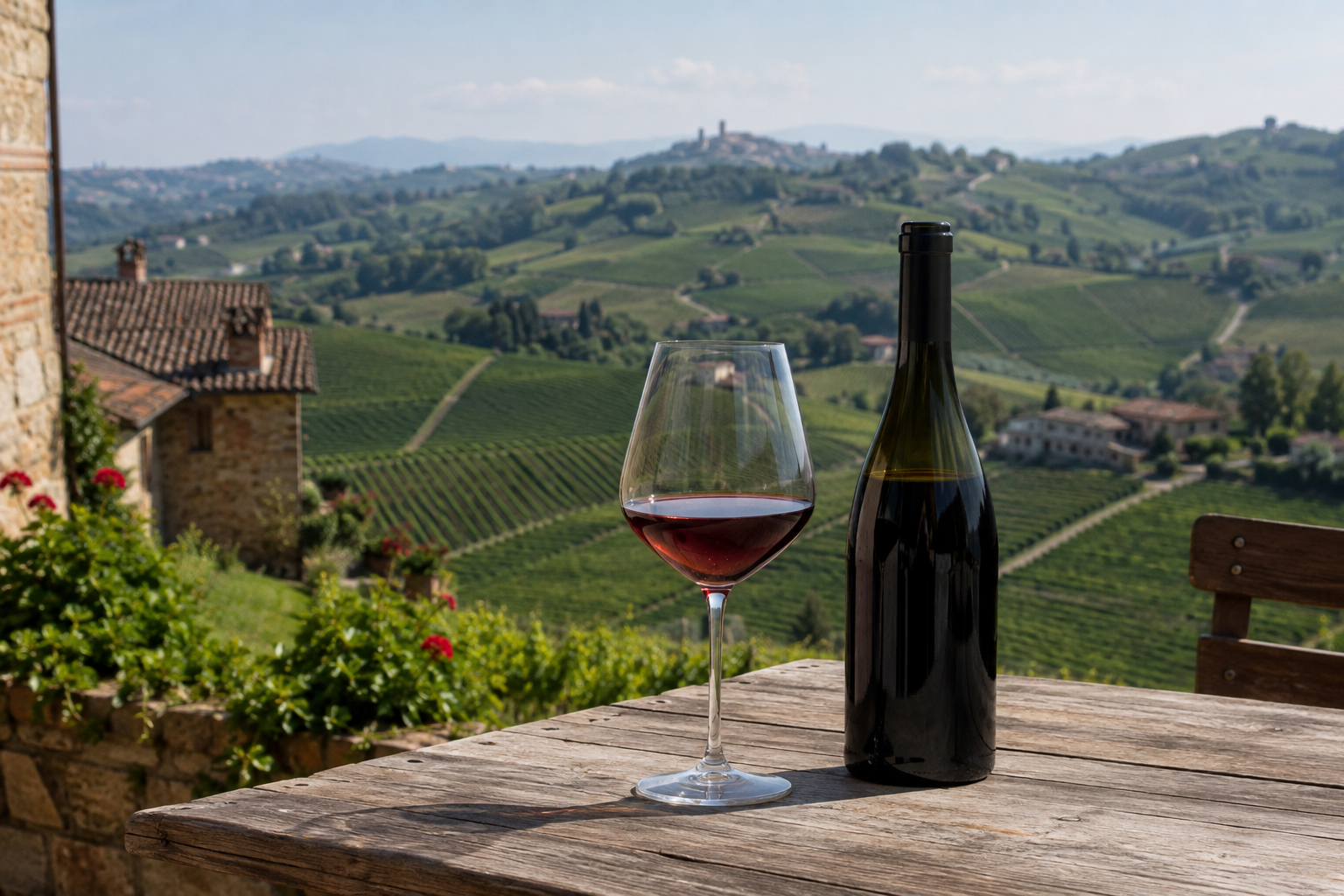
Barolo Albe 2020 from G.D. Vajra shows how inviting nebbiolo can be without losing its seriousness. Several vineyard sites come together in a wine that gives red fruit, floral notes and fresh acidity as much room as Barolo’s famous tannins.
Drinking window: 2027–2036 · Peak: 2029–2034
- Producer
- G.D. Vajra
- Wine
- Barolo Albe
- Vintage
- 2020
- Type
- Rött vin, Barolo DOCG
- Origin
- Piemonte, Barolo, Italien
- Grapes
- Nebbiolo
- Serve at
- 16–18 °C
- Air
- Allow 1–2 hours of aeration if needed; taste before decanting.
Translated from Swedish with AI assistance. Prices converted at 10 SEK = 1 USD.
Some Barolos want, above all, to be left alone. Others open the door earlier, even if a substantial tannic structure awaits inside. G.D. Vajra’s Albe belongs to the latter category: a wine that combines nebbiolo’s perfumed side with the backbone that makes the grape so fascinating at the table and in the cellar. The 2020 vintage is particularly interesting for anyone seeking a meeting of youthful fruit and future development.
Albe is not Vajra’s simplest wine, but it is often an introduction to the producer’s Barolos. What matters is not just its price relative to the estate’s more exclusive vineyard-designated wines. There is also a clear idea at work: several sites can together create balance and nuance rather than blur a sense of origin. The description below draws on producer information and the wine’s established style; it is not a report from a recent tasting of a bottle by us.
Three sites under the same morning sun
We are in Piedmont, in northwestern Italy, amid the rolling landscape of the Langhe south of Alba. Vajra’s home is Vergne, high in the municipality of Barolo. Here, altitude, aspect and air movement have a significant influence on how nebbiolo ripens. Barolo is no uniform hillside: distances that look negligible on a map can mean tangible differences in sun exposure, temperature and grape development.
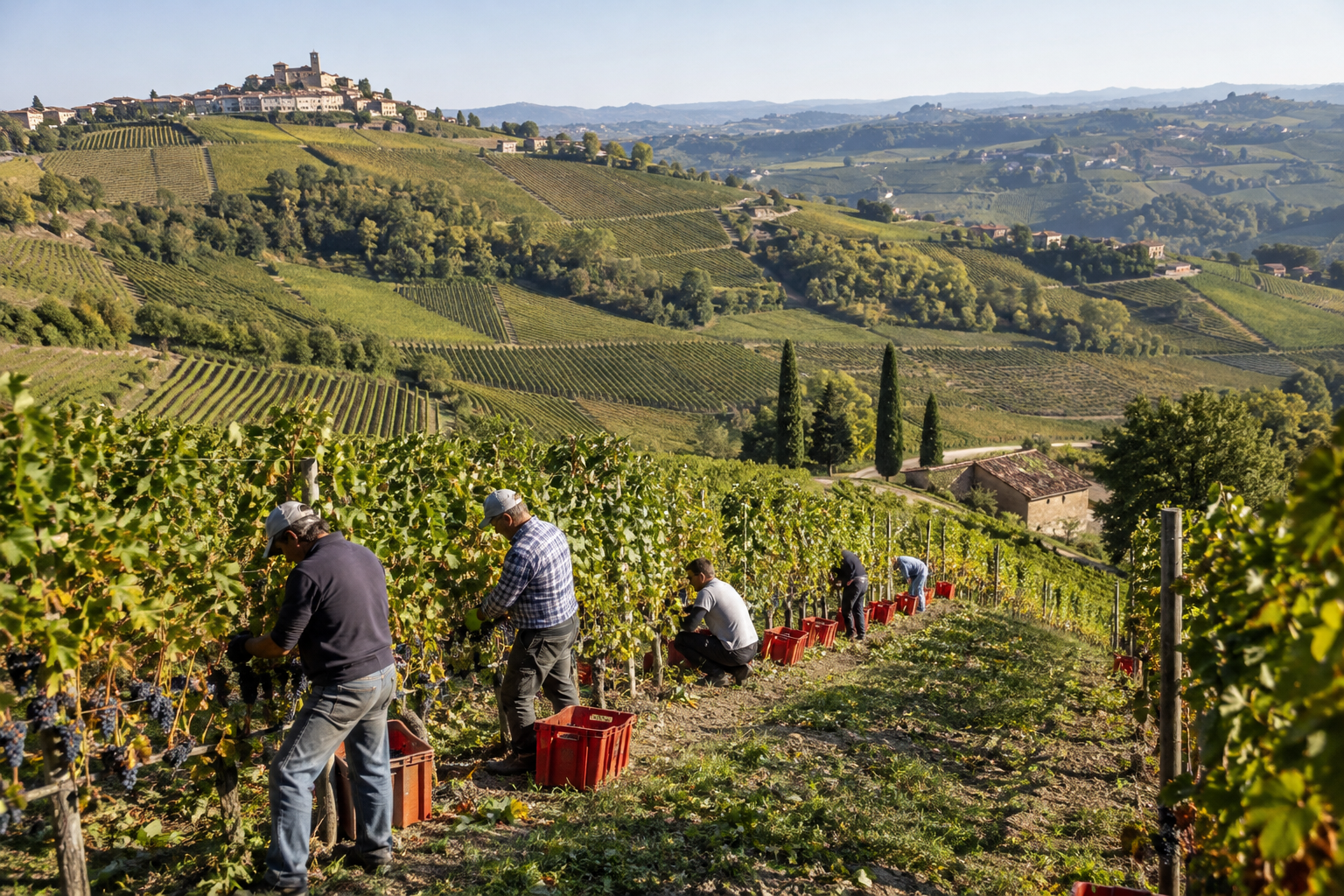
Albe is made from nebbiolo grown in Fossati, Coste di Vergne and La Volta. The producer gives an approximate elevation of 380–480 metres for these sites. The name means dawns, referring to the way the sun reaches the different slopes. It is a poetic image, but behind it lies a practical grower’s perspective: grapes from different exposures can contribute different proportions of aroma, acidity and structure.
The soils in this part of Barolo are based on ancient marine sediments, with calcareous marl and varying amounts of clay and sand. Put simply, marl is a mixture of lime and clay particles. The soil’s water-holding capacity, drainage and depth affect vine growth; it is worth being cautious, however, about claiming that lime in the ground translates directly into a chalky taste in the glass.
The climate has a continental influence, with cold winters, warm summers and often significant differences between daytime and nighttime temperatures. Nebbiolo ripens late and needs a long growing season. Altitude can help preserve freshness, but it does not automatically make every vintage cool. What counts is the interplay between the site and the year’s weather.
The Vajra family’s quiet precision
G.D. Vajra was founded in 1972 by Aldo Vajra. The initials come from his father, Giuseppe Domenico, while Aldo and his wife Milena became central to the development of the estate, now well known far beyond Piedmont. The next generation, Giuseppe, Francesca and Isidoro, also works in the family business. That continuity is reflected in an identity that does not rest on a single prestige label.
Vajra works with several of the region’s grape varieties and styles. A preference for aromatic definition, freshness and structure, without heaviness of fruit, runs through its Barolos. It is easy to call this traditional, but the word does not tell the whole story. Long skin contact and large casks can produce very different results depending on the quality of the grapes and how gently they are handled.
Albe also illustrates an older Barolo approach: combining vineyards to create a complete wine. A wine from several sites is not necessarily less ambitious than one from a single named vineyard. The difference lies more in the question the winemaker asks. Should the bottle express one particular slope as clearly as possible, or allow several parts to contribute to a coherent whole?
With Albe, the whole takes centre stage. Anyone wishing to understand Vajra can therefore start here without treating the bottle merely as a prelude to something more expensive. The wine’s approachable side is part of its own character, not a departure from Barolo.
Nebbiolo, time and large oak casks
Albe 2020 is made from nebbiolo, the only grape permitted in Barolo DOCG. The variety has a distinctive combination of relatively restrained colour, high acidity and substantial tannins. A pale ruby wine can therefore be both flavourful and powerful. Here, colour intensity is a poor measure of concentration.
During red-wine fermentation, the skins remain with the must and then the wine. This contact, known as maceration, contributes colour, aromatic compounds and tannins. Vajra’s descriptions of Albe emphasise relatively long skin contact and an approach in which extraction is adapted to the grapes. Exact fermentation times and temperatures for 2020 are not given here, as they should not be inferred from technical information for other vintages.
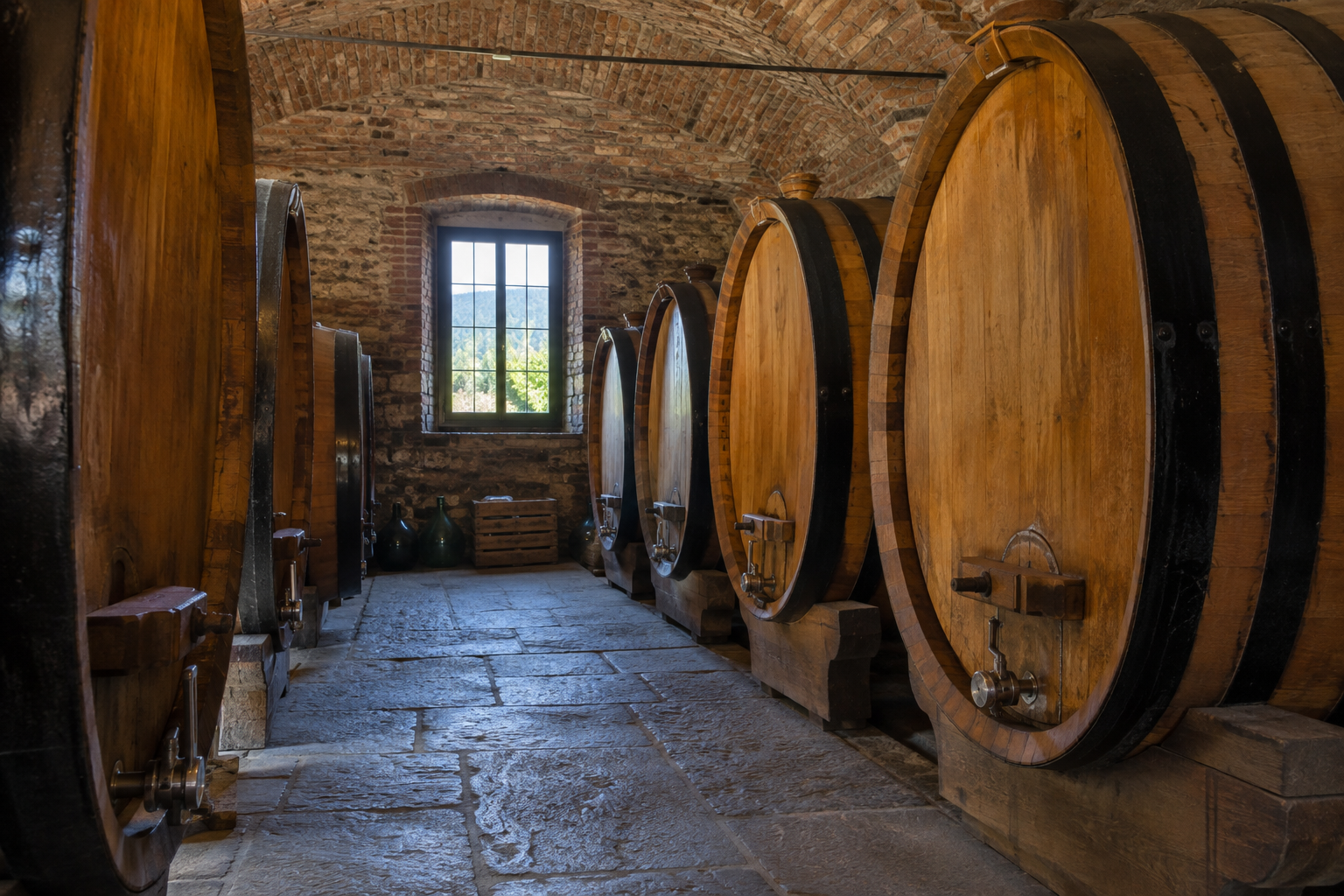
The wine is subsequently aged in large Slavonian oak casks. Such casks are often called botti and have less wood surface area relative to wine volume than small barriques. They therefore generally impart less pronounced toasted oak character, particularly when they have already been used. Their primary role is to let the wine mature slowly, not to lay a blanket of vanilla over nebbiolo’s aromas.
Barolo regulations require at least 38 months of ageing, counted from 1 November of the harvest year, including at least 18 months in wood. Vajra’s own ageing regime should be distinguished from this legal minimum. For Albe, the extended time in large casks is an important part of the style: the tannins are allowed to develop while the fruit and floral notes should remain clearly defined when the wine is released.
The 2020 vintage and its expression in the glass
Broadly speaking, 2020 in Piedmont was marked by a mild winter and an early start to the growing season. Rainfall in spring and early summer replenished water reserves ahead of a warm summer, though it should not be described as one uninterrupted spell of extreme heat. For nebbiolo, conditions in late summer and autumn were important to the final balance. Local differences and harvest timing played a significant role, as always.
Barolo 2020 is often described as relatively generous and aromatically accessible, with good fruit and a less austere manner than some more monumental vintages. This is a regional tendency, not a guarantee for every bottle. Nor does accessibility mean a short lifespan: acidity, tannin quality and the staying power of the fruit matter more than how stern the wine feels in the first minute.
For Albe 2020, red cherries, raspberries and floral associations such as rose and violet are useful reference points. Nebbiolo’s repertoire also includes orange peel, tea and subtle spice. These notes need not all appear at once. Temperature, air and the bottle’s development can shift the emphasis from juicy fruit towards more dried and earthy nuances.
On the palate, it makes more sense to think of energy and firmness than sheer weight. The acidity is mouthwatering and lends momentum, while the tannins register as a dry grip along the gums. The fruit needs to carry through that grip for the balance to convince. Albe’s appeal lies in the combination of fairly open aromatics and a structure that reminds us this is still young Barolo.
The finish should be understood as an interplay of fruit, freshness and lingering tannic grip, not simply the length of the flavours. With ageing, cherry and floral notes may be joined by dried rose, forest floor and leather. These are possible paths of development, not a promise of exactly how every bottle will taste.
Serve cool, give it air and consider cellaring
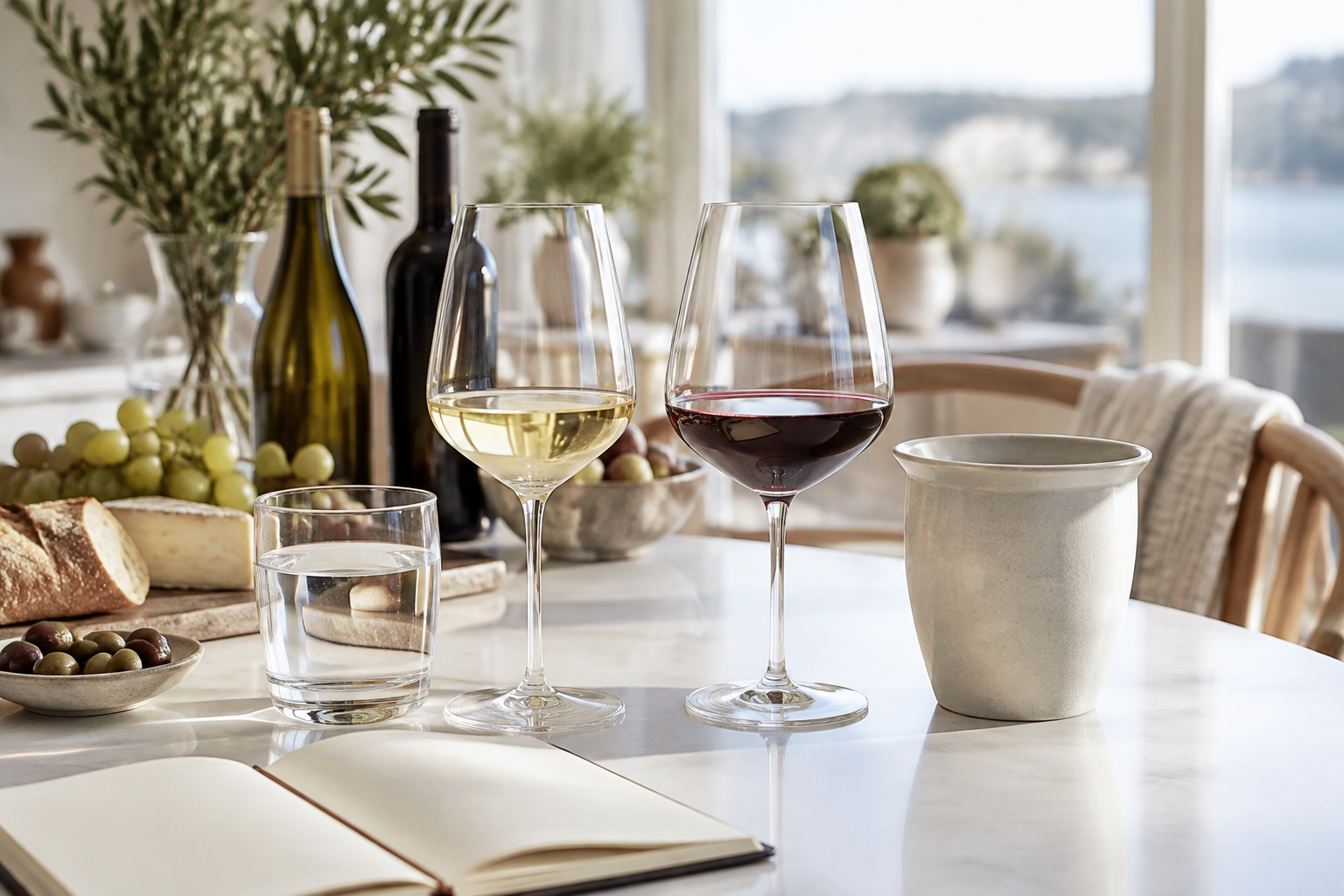
Serve Albe 2020 at around 16–18°C, ideally starting at the cooler end of the range. An overly warm wine can feel more alcoholic and less precise. Choose a large, tulip-shaped nebbiolo or Burgundy glass with room for the aromas, but do not fill it beyond its widest point.
One to two hours in a decanter is a reasonable starting point for a well-stored bottle that still feels youthful. Taste first: if the nose is already open, less time may suffice. Air does not age tannins in an afternoon, but it can help the aromas unfold and make the wine easier to appreciate as a whole. Any sediment can be separated by careful decanting.
The wine can be enjoyed relatively young with food, but a further three to ten years of proper cellaring is a reasonable option for those who appreciate more mature nebbiolo. A steady, cool temperature and good provenance matter more than an exact end date. Swedish buyers should also check that a listing or order really is for 2020; the same wine may be sold in a later vintage.
For food, two clear directions are enough: slow-braised beef cheek with polenta, or mushroom risotto with a moderate amount of aged Parmesan. The meat’s protein and the dish’s richness meet the tannins, while the mushrooms’ earthiness echoes the wine’s subtler aromas. Avoid excessive salt and fiery heat. An alcohol-free alternative for the same table is unsweetened, lightly brewed black tea served cool. Small pours also leave room to follow how Albe changes in the glass.
Tasting notes
- Red cherries
- Rose and violet
- Orange peel and tea
- Fresh acidity
- Pronounced tannins
Score 92/100. Preliminary editorial assessment based on the producer’s established quality and the vintage’s reputation. No verified individual critics’ scores are used, and the score is not the result of a recent tasting of a bottle by us.
16–18 °C · Allow 1–2 hours of aeration if needed; taste before decanting. · Large, tulip-shaped nebbiolo or Burgundy glass. Approximate market price: around $40–$50. Not a verified current Systembolaget price; price and availability for the 2020 vintage need to be checked.
- Slow-braised beef cheek with polentaThe meat’s protein and the dish’s richness balance the tannins, while the wine’s acidity refreshes the palate.
- Mushroom risotto with a moderate amount of aged ParmesanThe mushrooms’ earthy aromas meet nebbiolo’s nuances, while the risotto’s creaminess provides a counterweight to the tannic grip.
Sources
- G.D. Vajra, G.D. Vajra – producentinformation, familjens historia och Barolo Albe
- Consorzio di Tutela Barolo Barbaresco Alba Langhe e Dogliani, Barolo DOCG – ursprung, regelverk och information om skördar
- Systembolaget, Kunskap om vin, druvor och servering
Ask questions about "G.D. Vajra Albe 2020 – Barolo with Bright Fruit and a Long View". Answers are based on the magazine's own articles.