Four Red Wines, Four Corners of the World
An at-home tasting from Rioja and Bordeaux to Barolo and Mendoza
Four origins, four styles—and three things to look out for. With Muga, Cantemerle, Vajra and Catena in your glasses, learn to tell fresh acidity from grippy tannins and discover how different approaches to oak ageing reveal themselves.
Translated from Swedish with AI assistance. Prices converted at 10 SEK = 1 USD.
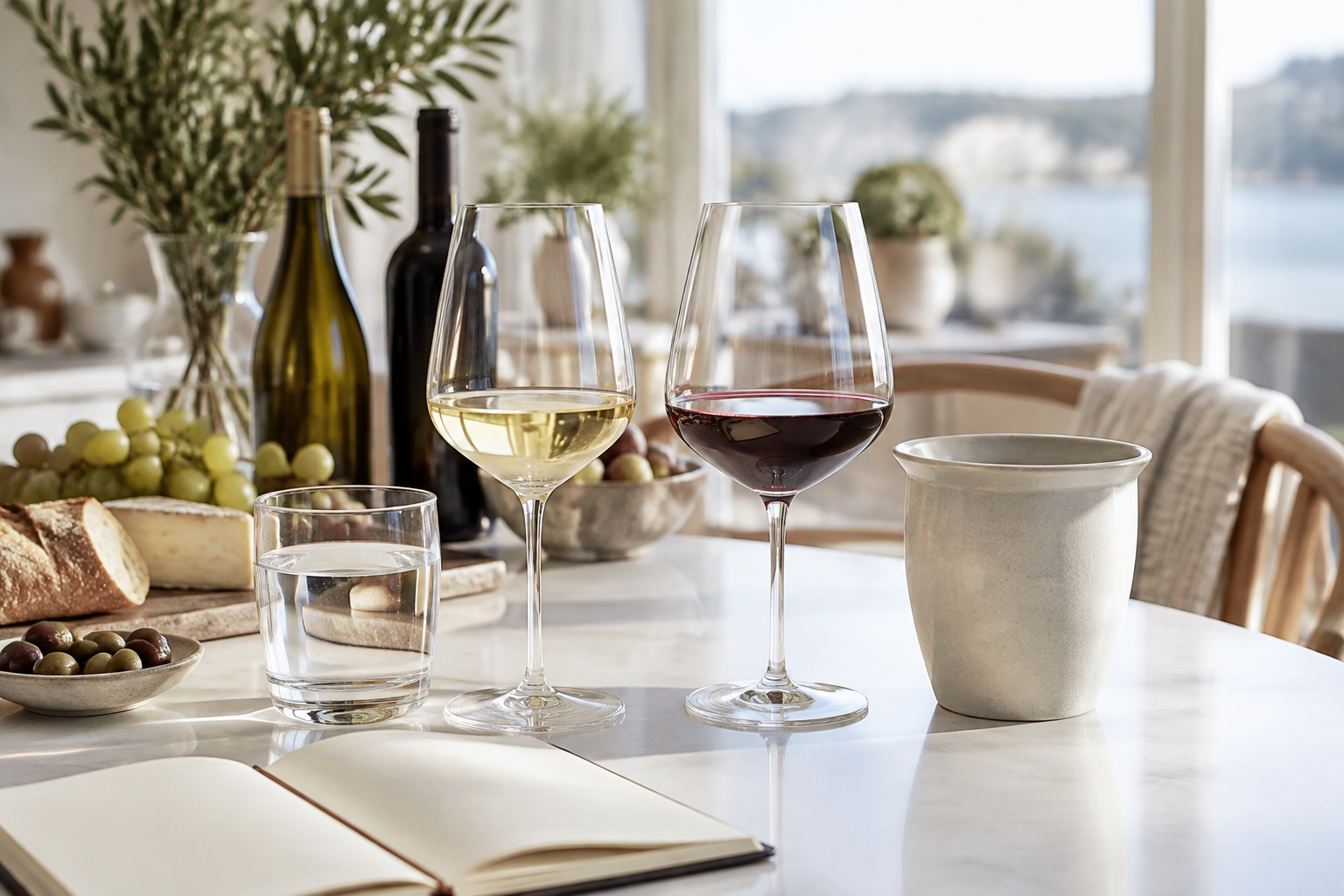
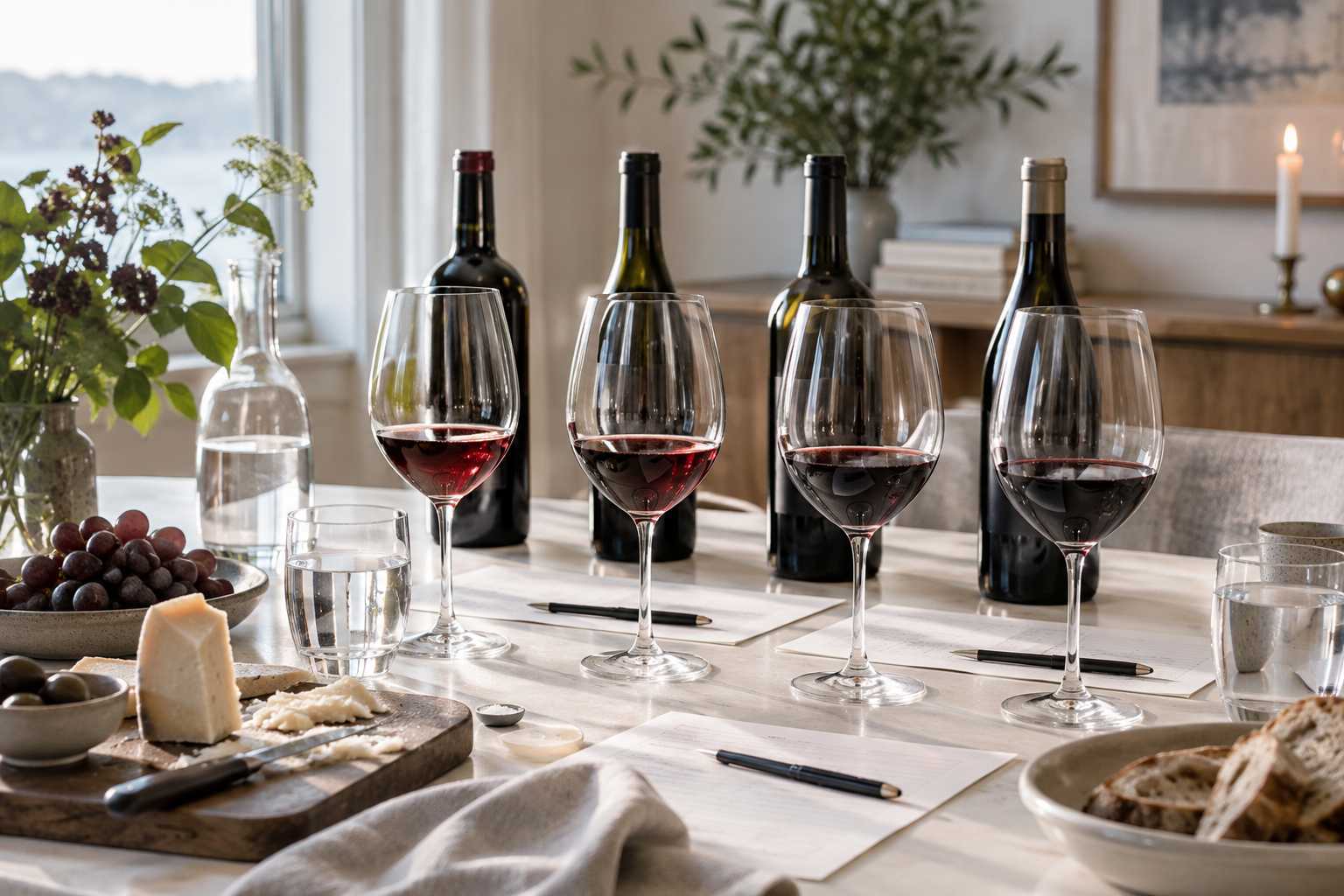
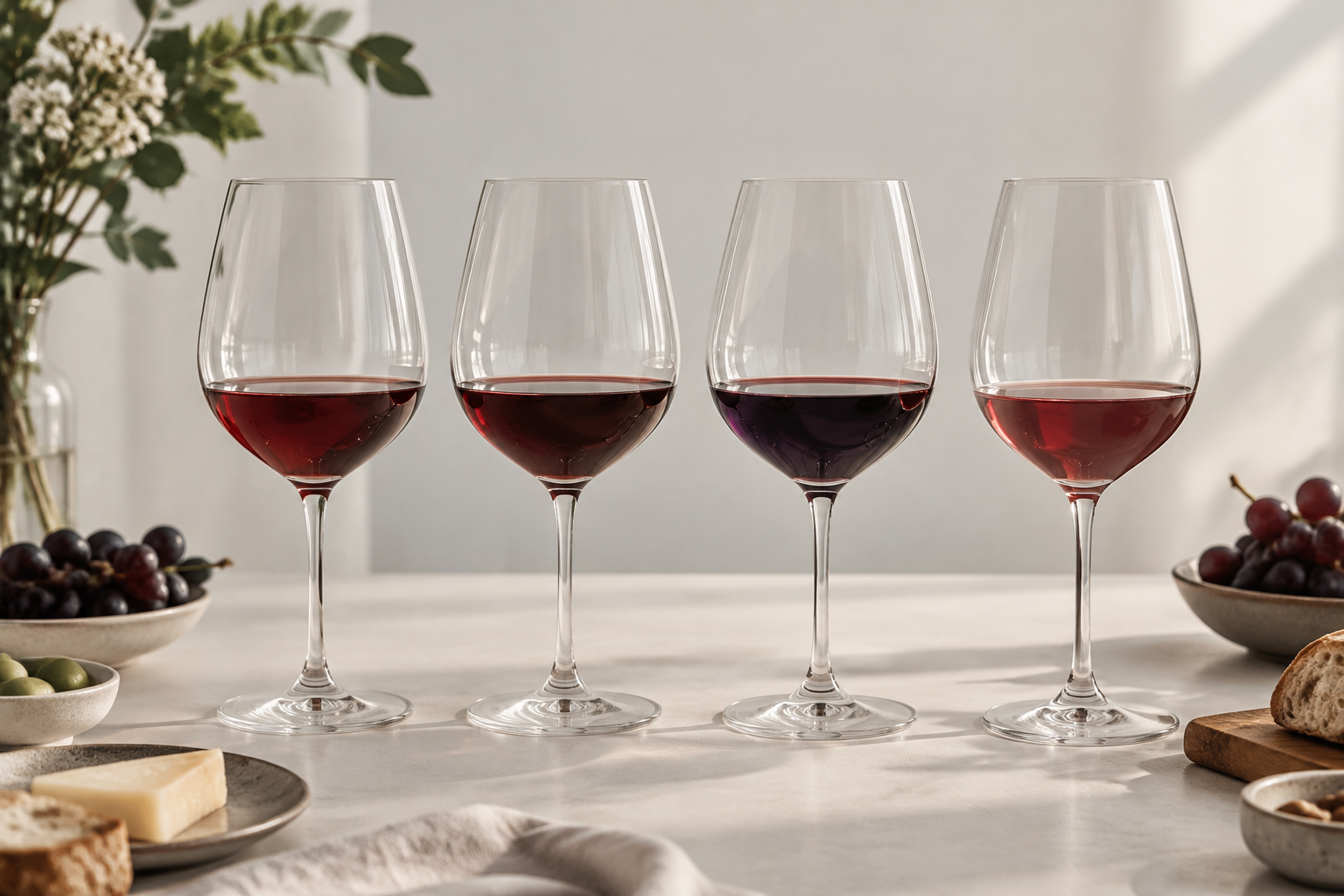
Four glasses stand on a white table. One wine leans towards translucent ruby, another towards deep violet. But colour will not tell you which will feel most astringent. Here, Rioja, Bordeaux, Barolo and Mendoza come together: four wine regions where grapes, growing conditions and cellar practices produce distinctly different styles.
The aim of this tasting is to distinguish three sensations. Acidity makes your mouth water. Tannins give a dry, astringent grip on the gums. Oak can contribute vanilla, cedar and toasty notes, for example, but can also influence a wine’s structure without tasting distinctly woody. Since the grapes, origins and vintages all vary, this is a comparison of complete wine styles, not a controlled experiment.
Prepare your glasses and your senses
Try tasting in a group of four to six. Pour around 4 cl of each wine per person into four identical glasses and serve at 16–18°C. Have water, plain bread and spittoons on the table. Bring out the food only after the first comparison.
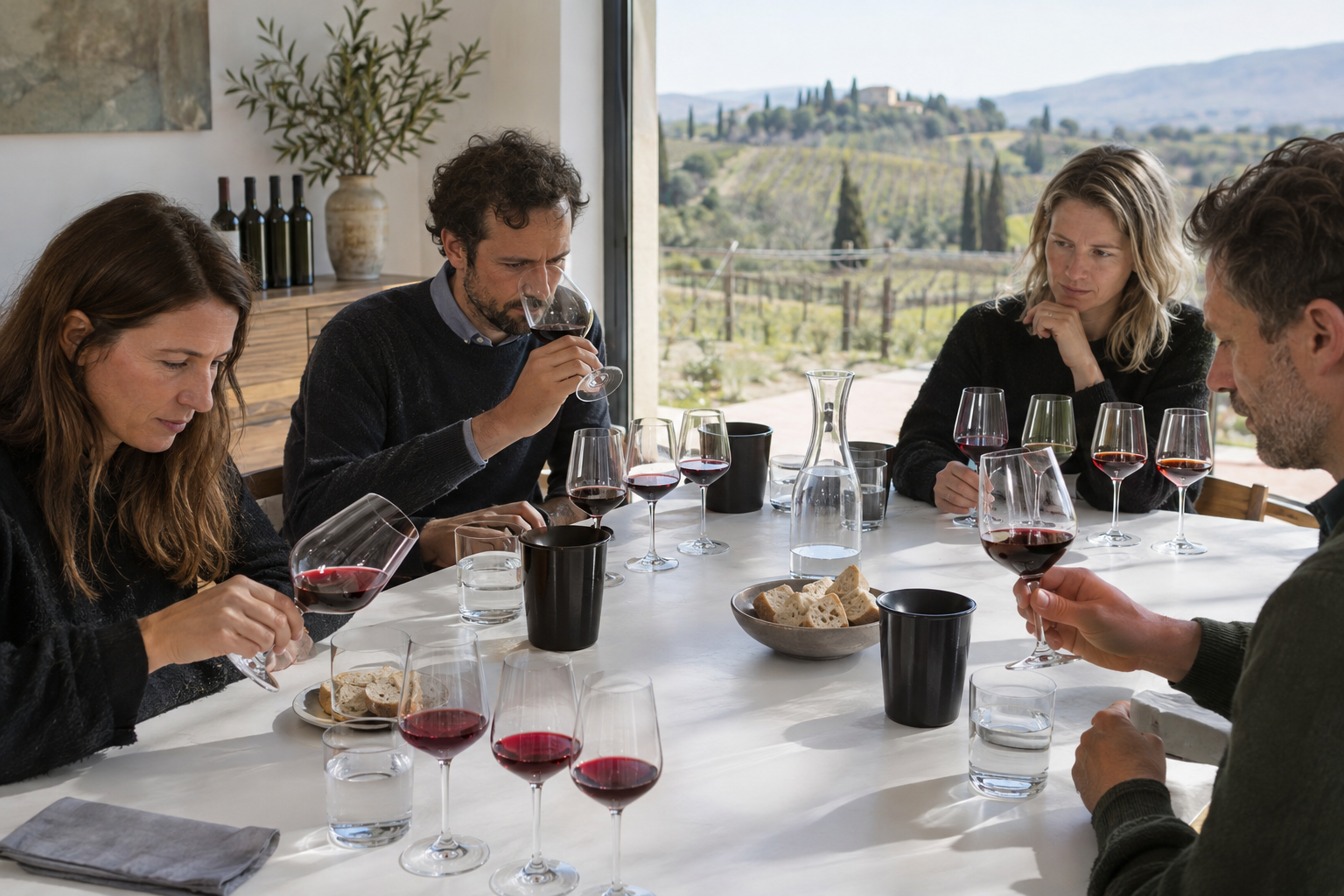
Open the bottles about an hour before the tasting. Taste them straight away; if any wine seems closed, give it some air in a decanter. Then follow how the wines change in the glass. Rate acidity, tannins and perceived oak character on a scale of one to five. Also note one word for the fruit and one for the mouthfeel.
The price ranges below are approximate buying budgets in US dollars, not verified current prices. Check prices and vintages at Systembolaget; these particular vintages may have been replaced or sold out.
Four wines in tasting order
1. Muga Reserva 2020 – Rioja, Spain
Grapes: tempranillo with garnacha, mazuelo and graciano. Budget: around $25–$35. Start with Muga Reserva 2020 – Rioja’s classic balance. Rioja is partly sheltered by mountains but also feels the cooling influence of the Atlantic. Here, traditional oak ageing meets red and dark fruit. Look for cherries, spice and possible hints of vanilla. Notice how the acidity holds the fruit together and how the tannins differ from the aromas of oak.
2. Château Cantemerle 2019 – Haut-Médoc, Bordeaux, France
Grapes: cabernet sauvignon, merlot, cabernet franc and petit verdot. Budget: around $35–$50. Continue with Château Cantemerle 2019 – Médoc with dark fruit and a light touch. The Médoc’s well-drained gravel soils suit cabernet sauvignon. Look for blackcurrants, cedar and a more linear tannic grip. Is the oak character less vanilla-like than in the Muga? Try to distinguish the intensity of the aromas from the wine’s actual body.
3. Catena Malbec 2022 – Mendoza, Argentina
Grape: malbec. Budget: around $15–$22. Catena Malbec 2022 – dark fruit with Andean freshness takes the comparison to high-altitude vineyards with intense sunshine and cool nights. Look for plums, blackberries and violets. Does the fruit feel rounder and the tannins softer than in the Bordeaux? Rich fruit can create an impression of sweetness even when a wine is dry.
4. G.D. Vajra Albe 2020 – Barolo, Piedmont, Italy
Grape: nebbiolo. Budget: around $35–$50. Finish with G.D. Vajra Albe 2020 – Barolo with bright fruit and a long future. Albe brings together several high-altitude vineyard sites and is aged in large Slavonian oak casks. Look for roses, tart cherries and a pronounced tannic grip behind the paler colour. Large casks can allow the wine’s own aromas to take centre stage. That is why Barolo comes last: depth of colour and astringency do not always go hand in hand.
Let food shape the second half
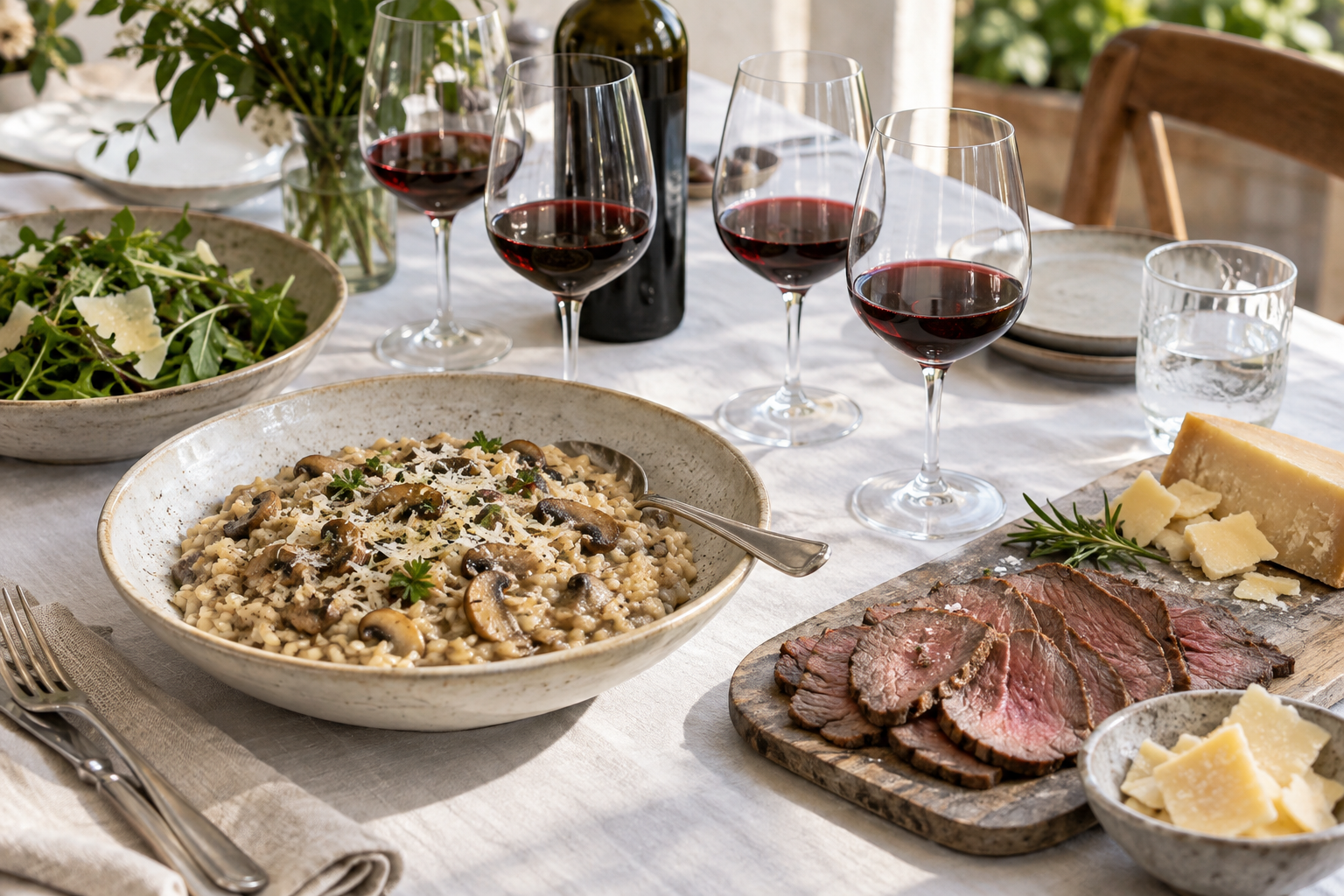
Serve mushroom risotto, roast beef and aged hard cheese. Taste each wine again: the fat and protein in the food can make the tannins feel less harsh, while the acidity offers a fresh contrast to the richness. Avoid hot chilli and sweet sauces, which make comparison more difficult.
Choose an alcohol-free red wine with little sweetness for anyone not drinking alcohol, and let the same questions guide the tasting. Reseal any leftovers, keep them cool and try comparing them again the next day.
What goes with the glass
- FoodMushroom risotto with parmesanThe creamy texture and the fat in the cheese soften the tannins, while the wines’ acidity refreshes the palate. Pay particular attention to how nebbiolo’s astringency changes with food.
- FoodRoast beef with oven-roasted potatoesThe protein in the meat and the fat in the dish can soften the perception of tannins, especially in the Bordeaux and Barolo.
- FoodAged hard cheeseSalt, fat and protein provide a clear contrast to acidity and astringency, without a sweet sauce interfering with the comparison.
Sources
- Bodegas Muga, Muga Reserva
- Château Cantemerle, Château Cantemerle
- G.D. Vajra, Barolo Albe
- Catena Zapata, Catena Malbec
- Julia Harding, Jancis Robinson och Tara Q. Thomas, red., The Oxford Companion to Wine (2023)
Ask questions about "Four Red Wines, Four Corners of the World". Answers are based on the magazine's own articles.