Cloudy Bay 2024 – Marlborough with Precision and Depth
Sauvignon blanc with citrus drive, tropical fruit and a history that changed perceptions of New Zealand.
Cloudy Bay Sauvignon Blanc 2024 combines Marlborough’s intense aromatics with the taut structure that makes this style so versatile at the table. Behind the wine is Cloudy Bay, the producer that helped make New Zealand sauvignon blanc an international benchmark.
Drinking window: 2024–2028 · Peak: 2025–2027, editorial estimate
- Producer
- Cloudy Bay
- Wine
- Sauvignon Blanc
- Vintage
- 2024
- Type
- White wine
- Origin
- Marlborough, Wairau Valley, Nya Zeeland
- Grapes
- Sauvignon blanc
- Serve at
- 10–12 °C
- Air
- Normally no decanting needed; allow 10–15 minutes to open up in the glass.
Translated from Swedish with AI assistance. Prices converted at 10 SEK = 1 USD.
The light and the cool nights
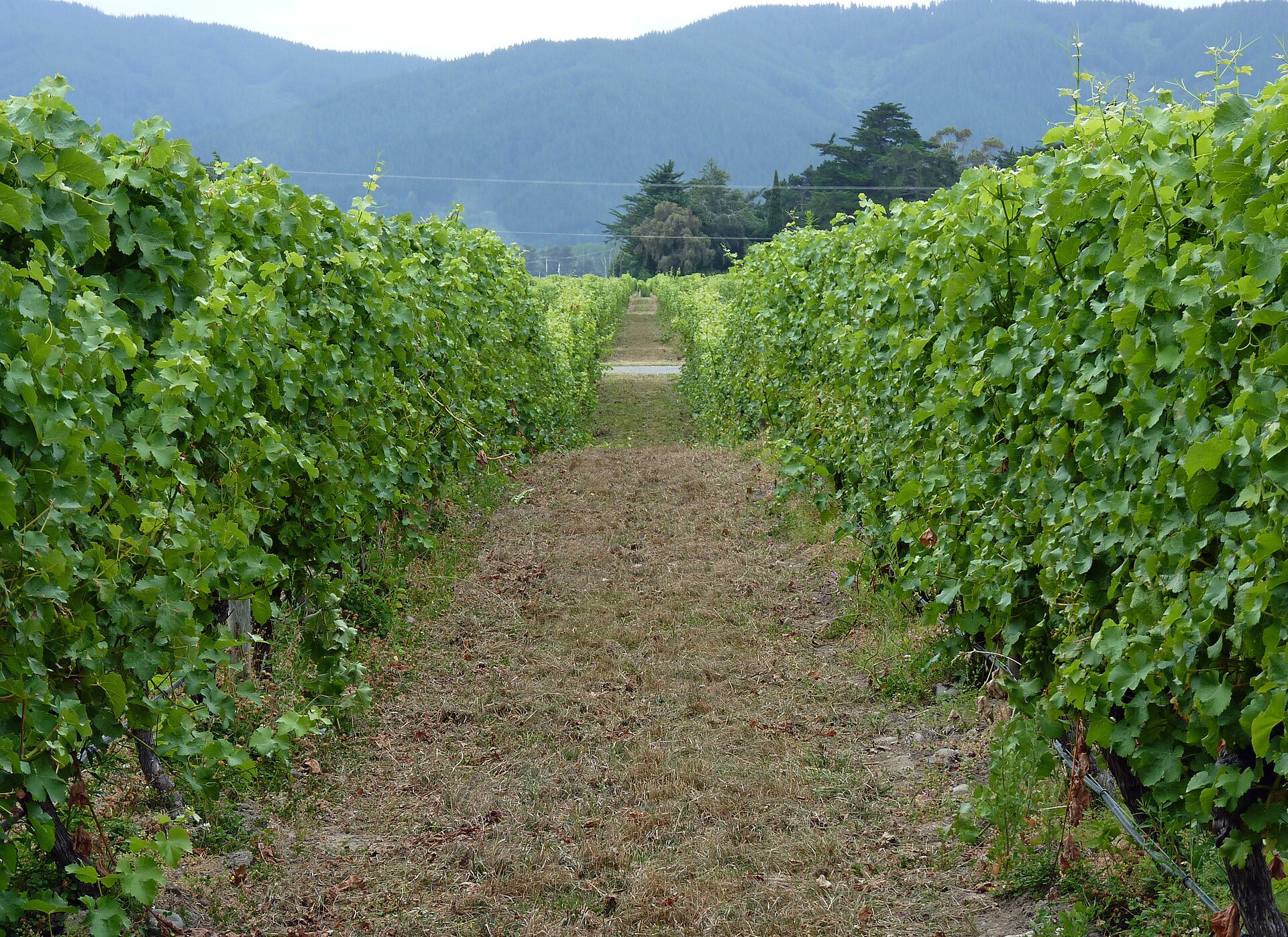
Marlborough lies at the northeastern tip of the South Island, where the mountains’ rain shadow, abundant sunshine and proximity to the sea create particularly favourable conditions for sauvignon blanc. Days can be warm, but nights are often considerably cooler. This helps the grapes retain their acidity as their aromas develop. The result is not simply a highly aromatic wine, but one in which ripe fruit can meet an almost electric freshness.
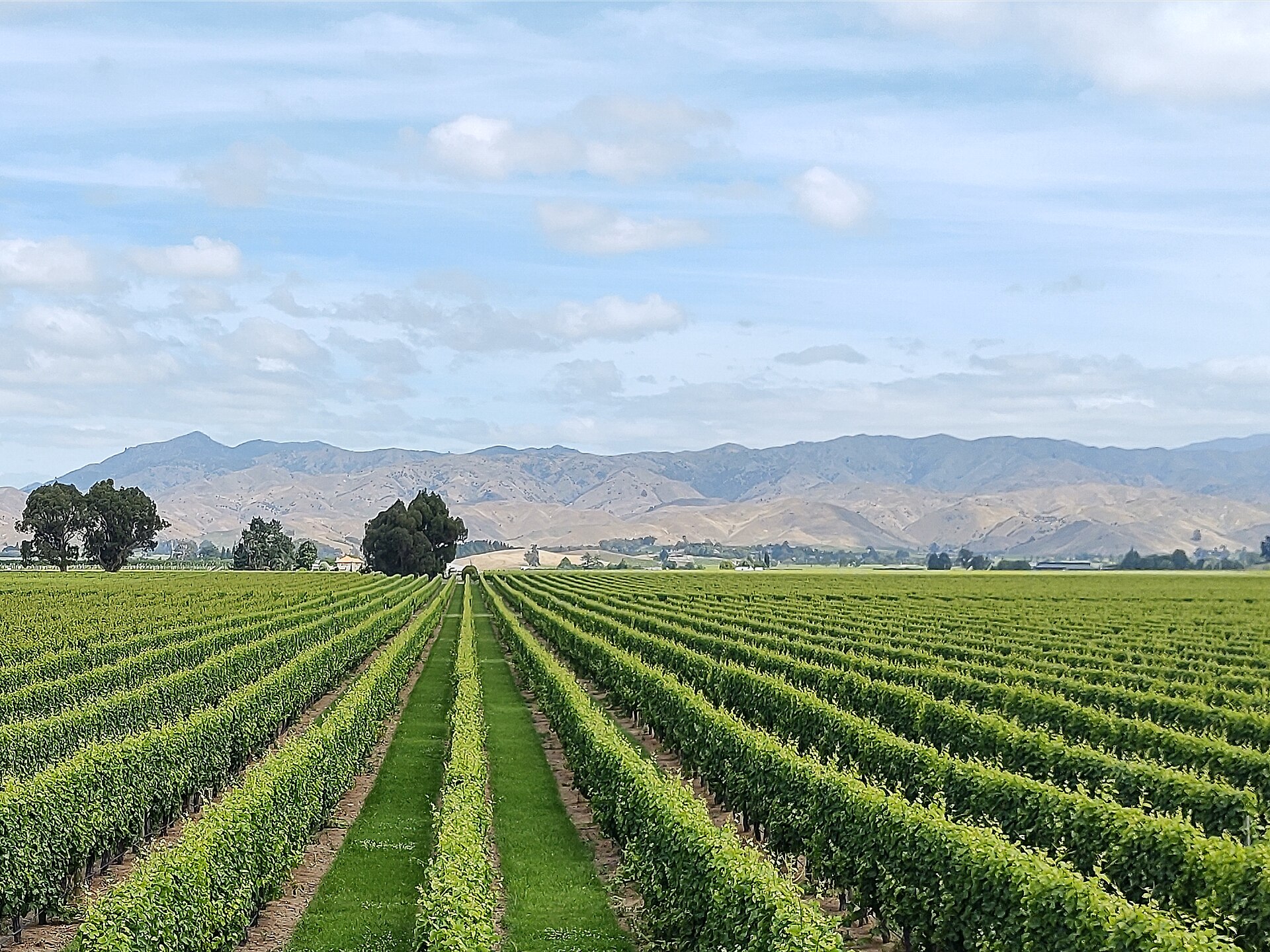
Cloudy Bay’s sauvignon blanc has its home in Wairau Valley, the region’s broad river valley. Vineyard sites here vary considerably. Gravelly, free-draining alluvial deposits sit alongside soils with more sand, silt and clay. These differences affect water availability, vine vigour and ripening. The wine is therefore best understood as a composition of sites rather than the expression of a single plot.
The familiar sauvignon aroma also has a tangible explanation. The grape’s aromatic compounds can evoke passion fruit and grapefruit, while others contribute grassy and herbal nuances. Viticulture, harvest timing and fermentation influence their proportions. Describing the wine as mineral can be meaningful as a tasting impression, but does not mean that the flavour of stones has travelled directly from the soil into the glass.
The producer that opened the door
Cloudy Bay was founded in 1985 by David Hohnen, who already had experience at Australia’s Cape Mentelle. Winemaker Kevin Judd played a central role in its formative years. At the time, Marlborough was still a young wine region in international eyes, although modern viticulture had already taken root. Cloudy Bay did not invent the region’s sauvignon blanc, then, but became an exceptionally effective ambassador for it.
The wines showed that sauvignon blanc could be both instantly recognisable and internationally sought-after far from the Loire Valley and Bordeaux. The combination of intense fruit, freshness and a clear sense of origin had a major impact on New Zealand’s wine reputation. Today the estate is part of LVMH’s wine business, but Sauvignon Blanc remains one of the wines that most strongly defines its identity.
The ambition is not simply to maximise aromatic intensity. Cloudy Bay’s style also seeks texture, balance and a cohesive finish. This is evident in its work with different vineyard parcels and in a cellar approach that goes beyond preserving as much youthful fruit as possible. The difference from simpler Marlborough wines often lies less in which fruits you can name than in how aroma, acidity and mouthfeel come together. For those who know the region well, that cohesion is an important part of the wine’s appeal.
The 2024 vintage and work in the cellar
Marlborough’s 2024 vintage was marked by dry conditions and a smaller harvest than the previous year. Regional reports highlighted good fruit quality, but a small crop does not automatically mean a great wine. Water availability, vineyard site and harvest timing still play decisive roles. For Cloudy Bay, 2024 is a vintage in which ripe fruit and retained freshness are central to the producer’s description.
The wine is made from sauvignon blanc. Cloudy Bay’s approach to this cuvée relies mainly on fermentation in stainless-steel tanks, while a smaller portion is normally fermented in oak barrels. The exact proportion of oak and detailed fermentation temperatures for 2024 are not given here because they have not been verified. Steel helps preserve the pure fruit character; the oak component is used more for breadth and texture than for overt vanilla or toasted oak.
A period resting on the lees—the yeast cells that settle to the bottom after fermentation—is also part of the producer’s approach. This can add roundness without making the wine heavy. The individual lots are then brought together in the final blend. This is an important step: the most aromatic tank will not necessarily produce the most balanced wine on its own. No precise ageing period for the 2024 vintage is established here.
In the glass and at the table
The producer’s description of the 2024 points towards citrus and passion fruit. Together with sauvignon blanc’s herbal notes, this offers a useful picture of the wine’s character: juicy fruit, fresh acidity and a dry finish. This is a source-based description of its style, not an account of a personal tasting. Accuracy in wine writing also requires that distinction to be clear.
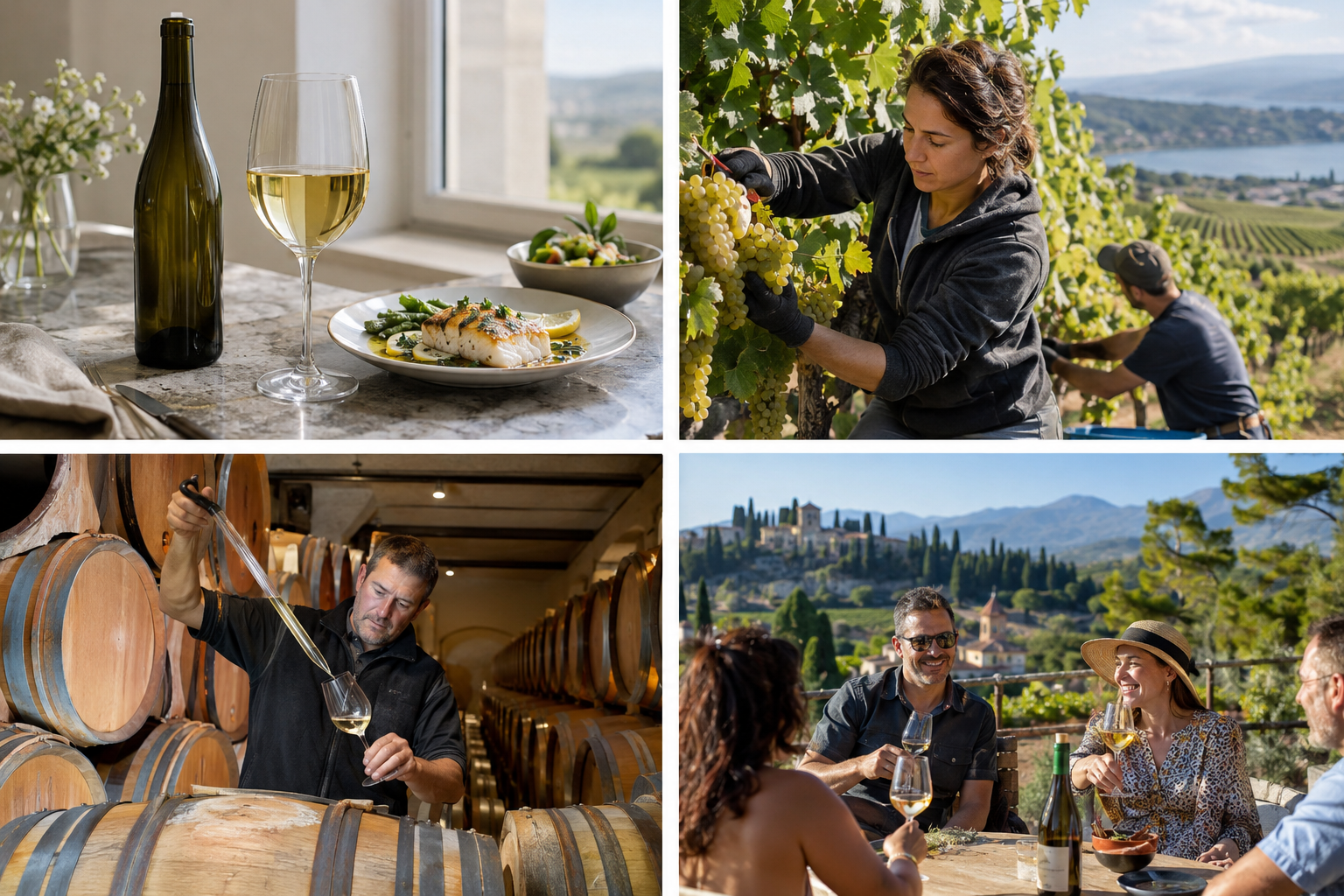
Look for the mouthfeel in the interplay between the breadth of the fruit and the tautness of the acidity. Tannins are not a structural pillar as they are in a red wine; it is chiefly acidity, concentration and a slight hint of skin bitterness that can provide grip. Expect a lingering, citrus-led finish rather than oak spice. With time in bottle, the most exuberant fruit aromas tend to subside and the wine becomes more rounded.
Serve at 10–12 °C in a medium-sized white wine glass. Fridge-cold wine conceals both nuance and texture. A decanter is not normally needed; instead, let the wine open up in the glass for a while. This vintage’s main appeal is its freshness, and it is best enjoyed young, with a reasonable drinking window of around 2024–2028 if stored well.
At the table, try ceviche with a restrained touch of chilli, where the wine’s citrus freshness meets the marinade, or oven-baked cod with herbs and lemon. A dry, alcohol-free white with pronounced acidity works as an alcohol-free alternative. The food need not be complicated: give the wine’s aromatic energy room to shine.
Tasting notes
- Citrus-driven
- Passion fruit
- Herbal freshness
- Lively acidity
- Dry finish
Score 91/100. Preliminary editorial assessment based on the producer’s established reputation, the wine’s style and regional vintage reports. It is not based on a personal tasting or verified critics’ scores for 2024; the figure should not be read as a verified critics’ average.
10–12 °C · Normally no decanting needed; allow 10–15 minutes to open up in the glass. · Medium-sized, tulip-shaped white wine glass. Approximate market price for 750 ml: around $30–$35. Not a verified current Systembolaget price; also check which vintage is being sold.
- White fish ceviche with lime and a restrained touch of chilli ↗The wine’s acidity meets the lime, while its aromatic fruit suits the dish’s fresh character. Avoid overly hot chilli. Recipe at Mat & Dryck.
- Oven-baked cod with herbs and lemonThe fish’s delicate flavour leaves room for the wine’s aromas, while lemon and herbs echo its fresh notes.
Sources
- Cloudy Bay, Cloudy Bay – Sauvignon Blanc och producentens historia
- New Zealand Winegrowers, Marlborough – vinregionens klimat och ursprung
- New Zealand Winegrowers, Annual Report 2024 – skörd och branschöversikt (2024)
- Wine Marlborough, Marlboroughs vinodling och regional information
Ask questions about "Cloudy Bay 2024 – Marlborough with Precision and Depth". Answers are based on the magazine's own articles.